Intuition or Data: Which Leads to Better Innovation Decisions?

Intuition or Data: Which Leads to Better Innovation Decisions?

“We need more data.”

How many times have you heard this?  How many times have you rolled your eyes (physically or mentally) and then patiently tried to explain that, when you’re doing something NEW, there is NO DATA.

There are analogous innovations, things that are similar in some ways that can be used as benchmarks, but nothing exactly like what you’re creating because nothing like it has existed before within your company.

As Innovators, we constantly balance our need for and comfort with gut decisions so we can move forward at speed with the broader organization’s need for data and certainty as a way to minimize risk.

But what role should intuition and data play in the early days of innovation?

This is exactly the question that my friend and former colleague, Nick Pineda, sought to answer in his thesis, “Are relevant experience and intuition drivers of success for innovation decision-makers?  An interview-based approach”


Robyn: Hi Nick!  Thanks for taking the time to speak with me today.  The topic you explore in your thesis is fascinating and something every innovator struggles with.  I’m curious, what led you to decide to explore it?

Nick: Interestingly, the process of deciding what to write my thesis on actually inspired the topic itself.

For the capstone of my Masters program, we were told to do a consulting project but I had spent so many years in consulting that I wasn’t terribly excited about that prospect.  One day, as I was walking to work, I felt this feeling in my gut that said, “Nick, this is not why you’re in the Masters program.”  I shared this feeling with my professor and faculty advisor, and they were open to a different approach.

As we discussed what I could do, the same topic kept coming up – a lot of what is published about innovation, especially with Agile, is about measurement and that we need to have evidence before we take action.  I don’t disagree with that but viewing things only through that lens kills the wisp of an idea that has the potential of becoming something amazing.  Ultimately, we decided to focus my thesis on what happens on the front-end of the innovation process and whether intuition or evidence and data lead to success.


Robyn: And, what did you learn?

Nick: Two things, one that wasn’t surprising and one that was.

First, what wasn’t surprising is that innovation decision-makers have a really clear awareness about the role that gut feel or intuition, knowing without knowing how you know, play in their process.

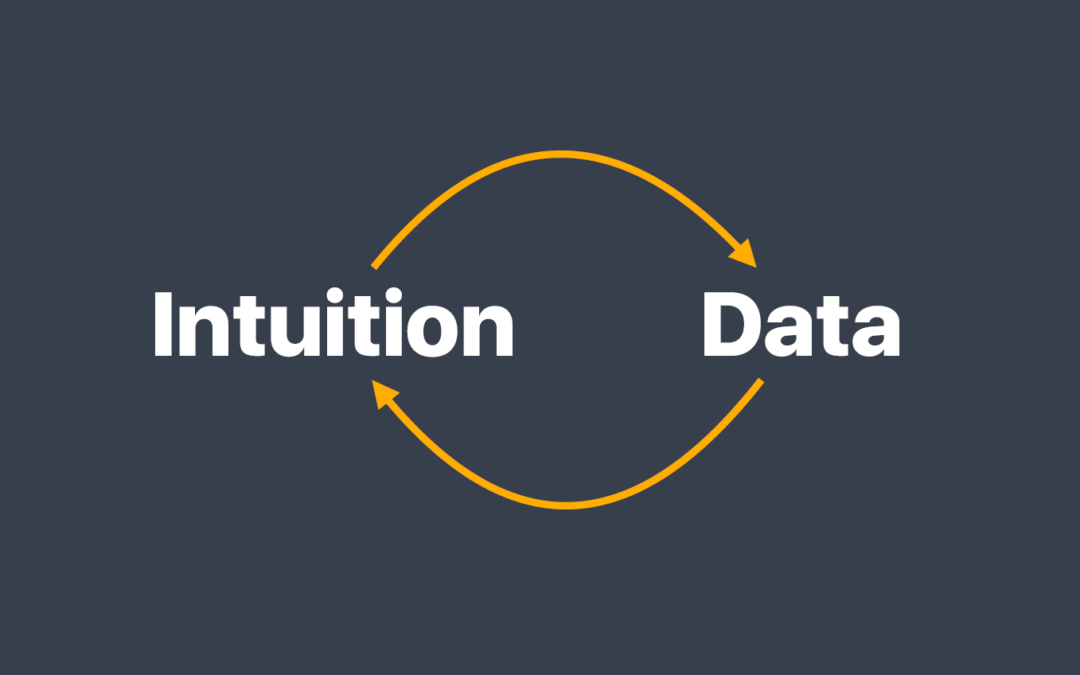
Second, what was surprising, is that anyone who leans much more heavily in one direction versus another (data vs intuition), had many more failures, and struggled to process what they learned from those experiences and incorporate those learnings into future actions and decisions.  Successful innovators know how to create a dance between their rational processes and their intuitive processes.


Robyn: It seems so, well, intuitive that using both intuition and data to make decisions will lead to better outcomes.  However, so many innovators rely on intuition and so many companies require data, how can you encourage that “dance” that’s required for success?

Nick: You need to start small.

First with the person who’s innovating, to help them enter that inner space and recognize all the different ways that intuition can show up.   It can manifest as a sensory experience, a change in temperature, even a color.  It varies by person and by moment and the key is to recognize when it’s happening.

A simple way to create this awareness is to reflect on how you decide whether to trust someone.  Every time you meet someone new, you have to quickly decide whether or not to trust the person.  How do you do that?  What is the feeling or sense that you get that leads to your decision?  How often are you right?

Next, you need to create a language or process within the team to externalize the intuitive sense.  In my research, I found examples of visionary leaders who were constantly able to use their intuitive sense, but their teams were constantly felt left out and wondering why they did all the work when the leader was just going to decide on gut.  More successful teams were much more open about why, when, and how they were using their intuition, even specifically asking other team members to share their intuition in meetings.

Then, as leaders, we need to normalize the fact that we’re not always going to have precise evidence to know what the right call is and that we’re trusting what we’ve learned as leaders in this space to make a decision.


Robyn: That last point is really critical, leaders must role model the behavior they want to see and that includes using and communicating their intuition.  Anything else pop up with respect to leaders and decision-making?

Nick: Ideally, leaders will go beyond normalizing the use of intuition to actively working to dismantle the organization’s bias against it.

Most organizations consciously or subconsciously, defer to the highest paid person or the most credentialed person in the room when making decisions.  This is a highly rational behavior, but it doesn’t lead to the best decision.  The reason is that it overlooks the fact that diversity of experience surfaces other data points and intuitive experiences that need to be part of the conversation to get to a better decision.

Innovation is a group experience and when intuition is allowed to show up in groups a group intelligence starts to manifest and the group makes better decisions.


Robyn: That’s quite a To-Do list for leaders and decision-makers:

  1. Manage your personal dance between intuition and data
  2. Normalize intuition by creating a language around it
  3. Create ways to tap into diverse experiences and intuition

Thanks so much for sharing these great insights, Nick!

Nick: My pleasure.


****


To learn more about intuition and innovation, Nick recommends that you:

READ:

WATCH or LISTEN TO:

TAKE ACTION and Conduct an idea retrospective

    1. Anchor on an idea
      • Think back to a memorable innovation success or failure?
      • What was the idea?
      • Where did the initial idea come from?
      • If you had to pick 1-2 of the most important decisions you had to make in the process of bringing this idea to life, what were those decisions?
    2. Did you use intuition?
      • Intuition defined: Intuition is a process of rapidly recognizing things without knowing how we do the recognizing, which results in affectively charged (somatic, sensory, or emotional experience) judgements.
      • To what degree was your process intuitive?
      • To what degree were you aware of what your brain was doing to seek an answer / path forward?
    3. How did your intuition show up?
      • Signals / Cues: What signals or cues did you have about which course of action to take or not to take?
      • Knowing: How did the answer for which path forward to take “show-up” for you? Where were you? What did it feel like?
      • Feeling: What did you feel during this process?
    4. Apply More Broadly
      • In what ways is the way you explored your intuition in this case similar (or not) to other decisions you make in your life?
      • How might you be more intentional about how to bring your personal brand of intuition into your innovation process?
How Looking at Art Can Make You a Better Thinker, Communicator, and Leader

How Looking at Art Can Make You a Better Thinker, Communicator, and Leader

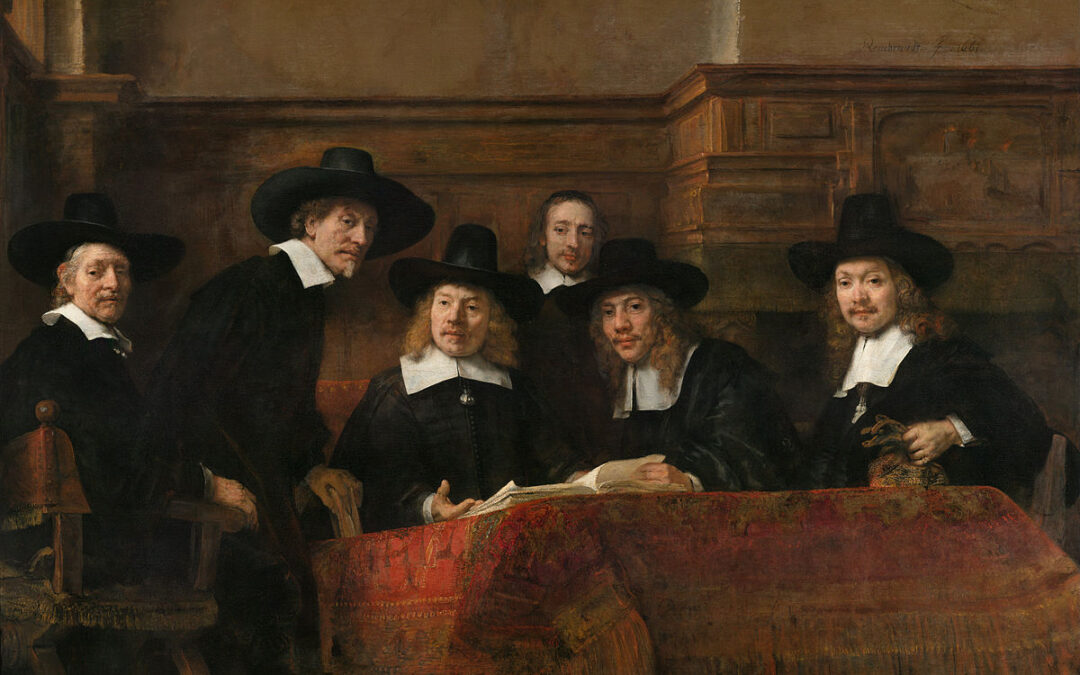
“It was quite a sight!  A dozen senior executives from a big, conservative financial services firm, all sitting on the floor in front of a painting, talking about what it could mean and why they think that.”

On a typical dreary November day, and Suzi and I were sitting in the café inside Boston’s Museum of Fine Arts.  She had just left her job as Head of Design Thinking at Fidelity Investments and I was taking a sabbatical before deciding what would be next for my career.  Introduced by a mutual friend, we decided to swap stories over lunch and a walk through one of the museum’s special exhibitions.

She was describing a Visual Thinking (VTS) session she had recently facilitated and the nearly instant impact it had on the way executives expressed themselves and communicated with each other.  She saw them engage in a level of creative problem-solving and critical thinking that they hadn’t in the past.

Intrigued, I set off to learn more.  What I discovered was a powerful, proven, and gasp fun way to help my clients navigate the ambiguous early days of innovation and embrace their inner curiosity and creativity.


Why should you care about VTS?

Imagine someone says to you, “If you and your team spend 1-2 hours with me each month for 9 months, I guarantee an improvement in your abilities to:

  • Quickly gather and synthesize accurate and unique insights by listening deeply and re-phrasing what they heard ensure understanding
  • Think critically and creatively by examining information or an idea from all angles, rethinking it, and deciding whether to keep, revise, or discard it
  • Communicate more clearly, respectfully, and productively with a variety of people inside and outside the organization
  • Work cross-functionally because they can apply critical thinking skills confidently to topics outside of their expertise
  • Innovate and experiment because they have learned how to individually and as a team operate in uncertainty
  • Provide more effective feedback by phrasing criticisms as questions and engaging in collaborative discovery and problem-solving conversations

Would you make the time commitment?

Now, what if they said, “All you have to do each month is sit together in a conference room and take part in a conversation.  No travel.  No additional expenses.  Just turn off your email and your phone for one hour and have a conversation in a room you already pay rent on.”

Would you do it then?

Of course you would.

Because you’ve been to trainings that focus on only one of the items in the list above and those trainings are expensive, time-consuming, and not nearly as effective as they should be.


What is Visual Thinking Strategies (VTS)?

According to the book, Visual Thinking Strategies: Using Art to Deepen Learning Across School Disciplines, VTS “uses art to teach visual literacy, thinking, and communication skills – listening an expressing oneself.”

Philip Yenawine was the Director of Education at the Museum of Modern Art (MOMA) in New York from 1983 – 1993.  During that time, he noticed that despite the museum’s efforts to organize and craft detailed explanations and interpretations for each piece of art, visitors would still ask lots of “Why?” questions and would remember little, if anything, from their visit.

Frustrated but curious, he and his team began studying developmental research and theory and discovered that what MOMA visitors needed wasn’t explanations, details, and facts, it was “permission to be puzzled and to think.  Consent to use their powerful eyes and intelligent minds.  Time to noodle and figure things out.  The go-ahead to use what they already know to reflect on what they don’t; the first steps of learning.”

Philip and his team with MOMA partnered with cognitive psychologist Abigail Housen to develop and test a process now known as Visual Thinking Strategies (VTS).

In the 30 years since their initial experiments, Philip and Abigail’s work has been used in 28 countries and 58 museums, over 12,000 students have engaged in VTS discussions and 1,200 people have become trained facilitators.


How to do VTS

The secret to VTS’ effectiveness is in the facilitation so if you’re going to do this, invest in an expert facilitator.  An expert facilitator is the only way to get the results listed above.


Here’s how a VTS session works:

  • Facilitator shares a piece of art specially selected so that “the subjects are familiar… but they also contain elements of mystery.”
  • Attendees take one minute to silently focus on the art
  • Facilitator asks 3 questions over the hour:
    • What’s going on in this picture?
    • What do you see that makes you say that?
    • What more can you find?
  • As each individual answers a question, the Facilitator:
    • Points at what is being observed
    • Paraphrases what has been said
    • Links what has been said to what others have said
  • Facilitator wraps up the session by thanking everyone and sharing something s/he learned from listening. They do NOT give “the answer” because “this isn’t about right and wrong but about thinking and…that the students singly and together are capable of wonderful, grounded ideas.”

That’s it – 1 piece of art, 3 questions, and at least 5 major benefits if you commit to the process.


Seems like something worth sitting on an art gallery floor for, right?

To learn more, read Visual Thinking Strategies: Using Art to Deepen Learning Across School Disciplines by Philip Yenawine and visit the website Visual Thinking Strategies

Back to Basics: What is Design Thinking?

Back to Basics: What is Design Thinking?

Last week, I published a post with a very simple goal – define innovation so we can stop debating what it means and start doing it.

The response was amazing.  So, I figured that this week I would tackle another buzzword – Design thinking.

We’ve all heard it and we’ve probably all said it but, like “innovation’ we probably all have a different definition for it.  In fact, in the last few months alone I’ve heard it used as a synonym for brainstorming, for customer interviews, and for sketching while talking.  Those things are all part of Design thinking but they aren’t the entirety of Design thinking.


What I tell my clients

When a client asks if we’re “doing Design thinking,” here’s what I say;

“Yes, because Design thinking is a way of solving problems that puts customers and stakeholders, not your organization, at the center of the process and seeks to produce solutions that create, capture, and deliver value to your customers, stakeholders, and your company.”


The Basics
  • What: One could consider the official definition of Design thinking to come from Tim Brown, Executive Char of IDEO, who stated that “Design Thinking is a human-centered approach to innovation that draws from the designer’s toolkit to integrate the needs of people, the possibilities of technology, and the requirements for business success”
  • Why: Useful in solving “wicked problems,” problems that are ill-defined or tricky and for which pre-existing rules and domain knowledge will be of limited or no help (or potentially detrimental)
  • How:
    • Inspiration: Understand the problem by building empathy with stakeholders (deeply understand their functional, emotional, and social Jobs to be Done) and document that understanding in a brief that outlines goals (ideal end state), bounds (elements to be avoided), and benchmarks against which progress can be measured
    • Ideation: Generate ideas using brainstorming to develop a vast quantity of ideas (divergent thinking) and then home in on the ideas at the intersection of desirability, feasibility, and viability that best fit the brief (convergent thinking)
    • Implementation: Prototype ideas so that they can be tested, evaluated, iterated, and refined in partnership with customers and stakeholders, ensuring that humans remain at the center of the process.
  • When: At the start of any R&D or development process
    • Traditionally, design was involved only in the late stages of development work, primarily to improve a solution’s functionality or aesthetic. Design Thinking’s ability to pull the designer mindset into the earliest phases of development is, perhaps, one of the biggest impacts it has made on business and technical fields
  • Where: Can be done anywhere BUT, because it is a human-centered approach, it must involve multiple human beings through the process
  • Who: Anyone who is willing to adopt a “beginner’s mind,” an attitude of openness to new possibilities, curiosity about the problem and the people with it, and humility to be surprised and even wrong


Important Points & Fun Facts
  • Design Thinking IS a human-centered design approach. This means that it seeks to develop solutions to problems by involving the human perspective at every single step of the process
  • Design thinking is NOT synonymous with user-centered design though user-centered design could be considered a subset of Design Thinking because it gives attention to usability goals and the user experience


  • Design Thinking was NOT invented by IDEO, but I would argue that they have done more to popularize it and bring it into the mainstream, especially into business management practices, than any other person or firm.
  • Design Thinking IS the product of 50+ years of academic and practical study and application. Here’s some fun facts:
    • 1935: The practice of Design thinking was first established by John Dewey as the melding of aesthetics and engineering principles
    • 1959: The term “Design thinking” was coined by John E. Arnold in his book Creative Engineering
    • 1991: the first symposium on Design Thinking was held at Delft University in the Netherlands
    • 2000s: Design thinking is widely adopted as an innovation approach thanks to books by Richard Florida (2002), Daniel Pink (2006), Roger Martin (2007), Tim Brown (2009), and Thomas Lockwood (2010)
    • 2005: Stanford’s d.school begins teaching Design thinking as a general approach to innovation


  • Design Thinking is NOT just for radical/breakthrough/disruptive innovation
  • Design Thinking IS useful for all types of innovation (something different that creates value) resulting from wicked problems. In fact, as far back as 1959, John E. Arnold identified four types of innovation that could benefit from a Design thinking approach:
    1. Novel functionality, i.e. solutions that satisfy a novel need or solutions that satisfy an old need in an entirely new way
    2. Higher performance levels of a solution
    3. Lower production costs
    4. Increased salability


If you want to learn more…

As noted above, there are lots of resources available to those who are deeply curious about Design thinking.  I recommend starting with Tim Brown’s 2008 HBR article, Design Thinking, and then diving into IDEO’s extremely helpful and beautifully designed website dedicated entirely to Design thinking.


Here’s what I’d like to learn…
  • Was this helpful in clarifying what Design Thinking is?
  • What, if anything, surprised you?
  • What else would you like to know?


Drop your thoughts in the comments or shoot me an email at robyn@milezero.io

Back to Basics: What is Innovation?

Back to Basics: What is Innovation?

When I worked on P&G’s WalMart sales team, one of my bosses was a big guy with an even bigger personality.  He shared his opinions loudly and broadly and one of his opinions was that we needed to stop using the word “breakthrough.”

“If I have to hear one more time about some new ‘breakthrough’ soap, I will throw you out of this office myself!” he would bellow.

Years later, I can’t help but wonder what he would think of the word “innovation.”

In May 2012, The Wall Street Journal published an article positing that, as the word “innovation” increased in usage, it decreased in meaning.  The accompanying infographic said it all:

  • 33,528: Times “innovation” was mentioned in quarterly and annual reports in the previous year
  • 255: Books published in the last 90 days with “innovation” in the title
  • 43%: Executive who say that their company has a Chief Innovation Officer or similar role
  • 28%: Business schools with “innovation,” “innovate,” or “innovative” in their mission statements

That may seem like a lot but, remember, that data is nearly 8 YEARS OLD!

The desire for and investment in Innovation in all its forms – accelerators, incubators, startup/venture studios, corporate venture capital teams – has only grown since 2012.

While this may seem like a good thing, the fact that the success rate of innovations hasn’t changed, means that most people react to “innovation” the same way my boss reacted to “breakthrough” – if you bring it up, they throw you out.

To avoid getting thrown out of offices, one of the first thing I do with my clients when we begin working to build innovation into an enduring capability within their companies, is re-establish what innovation is and is not.

Innovation IS something different that creates value.

When people hear the term “innovation,” they tend to think of new-to-the-world gadgets that fundamentally change how we live our lives.  Yes AND it’s many other things, too.  Let’s break down the definition:

  • “Something” includes products and technology, it also includes services, processes, revenue models, and loads of other things. Consider this, many would argue, quite convincingly, that the Toyota Production System was one of the biggest innovations of the 20th century
  • “Different” often surprises people. After all, even Merriam Webster defines innovation as “something new.” But here’s the thing, one of the most commonly cited innovations, the iPhone, wasn’t “new.”  Even Steve Jobs admitted it when he said, in his keynote speech, that Apple was introducing three products – a widescreen iPod with touch controls, a mobile phone, and an internet connected device.  The iPhone was, however, different because it combined those three devices into one.
  • “Creates value” is probably the most important part of the definition. All innovations solve problems.  Solving problems creates value.  If you solve a big problem, either because it’s a problem lots of people have or it’s a very painful problem a few people have or something in-between, you create a lot of value for others and for yourself.
Innovation IS NOT a one-size-fits-all term.

Think of it this way, both a Kia and a Maserati are cars, but you wouldn’t expect to pay Kia’s price tag and get a Maserati (and vice versa).  Similarly, both a convertible and a pick-up truck are automobiles, but you wouldn’t use your convertible to carry building equipment to a construction site.

With a definition as broad as the one above, it’s possible for “innovation’ to become even more meaningless as it gets applied to more things.  That’s why it’s important to identify different types of innovation.

There’s no universally accepted set of innovation types, which is why I recommend companies consider defining at least three types that reflect their business and forward-looking strategies.

One of the most common set of innovation categories is based on the degree of change required for implementation:

  • Core Innovation requires minimal or no change to the current business model (customers, offerings, revenue model, resources and processes). Also known as Continuous or Incremental Innovation, this is the unglamorous but deeply important work of constantly improving what you do and how you do it.
  • Adjacent Innovation changes a significant change to at least one element of your business model. It could be changing who you serve, like expanding from interventional cardiologists to general cardiologists, what you offer, like P&G’s expansion into “durable goods” when it launched Swiffer, or how you offer or deliver it.
  • Radical innovation is the stuff that gets all the press. These innovations fundamentally change the business, like IBM moving from computers to business services.  These innovations are high-risk and require a lot of time, money, and patience to see to fruition.  This type of innovation is also called “Breakthrough” but, for obvious reasons, I shy away from that term.

There are many things that need to be done to shift innovation from buzzword to business capability. Defining innovation AND at least three different types is only the first step in moving from innovation theory and theater to building innovation into a true capability that drives sustainable growth.

Or, as I would tell my old boss, “It’s the first step.  But it’s a breakthrough one.”

Originally published on December 30, 2019 on Forbes.com

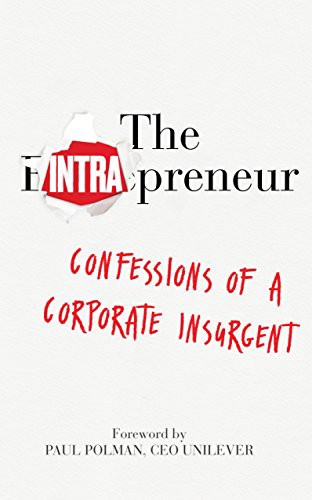
The Intrapreneur, Confessions of a Corporate Insurgent

The Intrapreneur, Confessions of a Corporate Insurgent

When I first heard about this book, a first-person account of innovating within a large corporation, and that it was set in a mental hospital, I thought “Yup, sounds about right.”

The craziest, most inspiring, and strongest people I have ever known are intrapreneurs. Because you have to be crazy to believe that you can change a massive organization, you have to inspire others to follow you into the fight, and you have to be strong to withstand near-constant defeat and, if and when success arrives, shine the spotlight no on yourself but on all the people who fought alongside you.

Gib’s story is similar to those of other Intrapreneurs.

He was in his early-30s and only a few years into his tenure at Accenture when he proposed the creation of Accenture Development Partnerships based on his experience working with Voluntary Service Overseas (VSO), a program in which business professionals would be loaned out by their employers (who would hold their jobs for 6–12 months) to work as volunteers in developing countries. Corporate social Responsibility (CSR) was all the rage at the time and, Gib reasoned, Accenture was well positioned to replicate VSO’s model given its global staff of bright young consultants and list of clients eager to appear to do good in the world.

The next 15 years were a roller-coaster, one familiar to anyone who has tried to innovate in a corporate environment. The ups of getting support, seeing things work, and watching change unfold. The downs of losing champions, justifying your existence, and fighting to maintain your meager resources despite phenomenal results. The ride ended not with a return to the station (aka a quiet role back in the core business) but with a four-day stay at a psychiatric hospital when his friends and family became concerned about his manic energy and fixation on creating a “Fourth Sector” that would combine the best of the public (government), private (business), and third (NGO) sectors to serve humanity’s greatest needs.

3 Profoundly True and Important Messages

Even though his story is one I lived early in my career, when I was an intrapreneur at P&G, and one that, as a corporate innovation consultant, I’ve seen others live, there were three passages in the book that I found so profoundly important and true that they simply must be shared

Innovation, and lack thereof, is a leadership problem.

“At its core, the problem is about leadership. Too many people believe leadership comes as the result of a promotion — or from a fancy job title on a business card. Not at all. Leadership is more of a mindset than a skillset. Leaders can emerge at all levels of an organisation, even low down.”

Corporate antibodies are the #1 killer of innovation

(Reflecting on an unsupportive executive):

“(Executive) was old school leadership. He’d climbed the ladder in the Business 1.0 world. He was programmed to have a single-minded focus on the business fundamentals — an entire career spent cutting cost, growing revenues, driving efficiency. What’s the problem with that? You might ask. It certainly worked for him, and he’d reached the heady heights of the senior management ranks.”

(When asked it this executive was the main problem):

“Yes and no. We also got confronted by legal, tax, compliance, security, you name it. My team bore the brunt of their endless checks, audits, and bureaucracy. I remember having a very strong feeling that we were suffering from a thousand cuts and I was powerless to do anything. Good people were leaving our team out of sheer frustration or pressure.”

Intrapreneurs are the heroes this world needs

“Intrapreneurs are not content with business as usual and aspire to drive change bottom up and inside out of their own organisations. These are the people who won’t change companies when they get frustrated in their jobs or crave more purpose from their careers. Instead, they stay put and change the companies they’re in….

No one ever said it would be easy. Of course it’s risky for your career. Sure, you’ll be laughed at. Told you’re crazy. Overlooked for promotion. Yes, you might even lose your job. I often think of the reactions that a Picasso or a Jackson Pollock must have had when they shared their first works of art. Or how silly that first person trying to start a Mexican wave must have felt when they stood up screaming with their hands in the air, only to find they were the only one. My point is that you may have to be prepared to appear crazy to others if you’re going to be successful in driving change in any organisation.”

In closing

The Intrapreneur is a good read (though it does get a bit self-congratulatory in parts). Reassuring to other intrapreneurs that they are not alone. Perhaps eye-opening to executives who wonder why their organizations aren’t more innovative. Definitely the story of someone on the edge of sanity. Because all intrapreneurs are.