
by Robyn Bolton | Mar 30, 2026 | Just for Fun, Leading Through Uncertainty
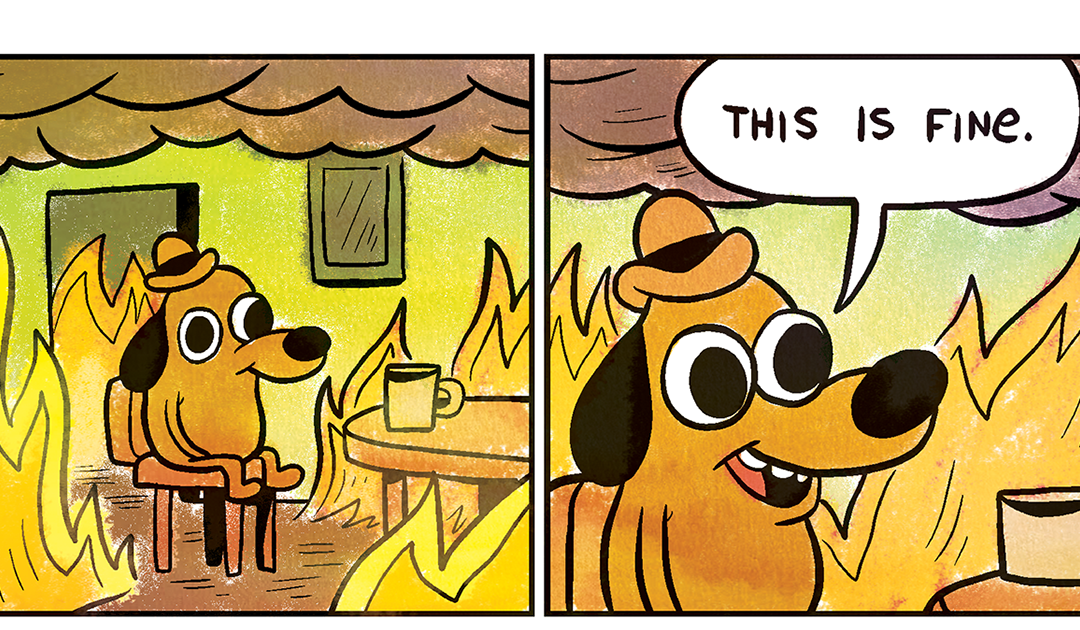
We survived the first quarter of the year. Congratulations everyone, job well done.
Did we hope for more than just survival? Of course we did! But hey, sometimes just living to fight another day is a victory and we still have nine more months to hit our KPIs, deliver our OKRs, and nail this fiscal’s BHAG.
So, let’s take a moment to focus on what really matters: Baseball is back!
Along with the hope of the new season, and the warm weather that comes with it, comes an excuse to revisit the wisdom of classic baseball moves. In 2021, I wrote about Moneyball’s lessons in innovation and it continues to be one of the top read posts on my blog.
If you feel overwhelmed by Q1, fear not! There’s no greater source of advice on finding simplicity, solving problems, and leading people than Bull Durham.
When you’re overwhelmed, go back to the basics.
Skip: This… is a simple game. You throw the ball. You hit the ball. You catch the ball.
The Durham Bulls are 8-16 and Skip (the manager) has had enough. He’s tried every tool in his coaching toolkit and the team continues to perform poorly, display a poor attitude, and deliver a halfhearted performance. Overwhelmed and frustrated, he turns to veteran player Crash Davis for advice. “Scare ‘em,” Crash offers and what comes next is one of the greatest tirades on film.
But the greatest lesson here is what comes towards the end of the tirade: a description of the utter simplicity of baseball. There’s no strategy, no competitor analysis, no number-crunching, just a simple explanation of the most basic elements of the job. Throw. Hit. Catch.
It’s easy to get overwhelmed by news, technology, corporate politics, the list goes on. That overwhelm causes us to worry, lollygag, and obsess about what could happen. But when we cut through all that to find the essence of what we do and why we do it, things become remarkably clear and the next steps feel obvious.
Fall in love with the problem. Not the solution.
Zeke: We need a night off just to stop our losing streak. We need a rainout.
Crash: I can get us a rainout.
The Bulls are on another losing streak but this time on the road. As the team bus pulls into another motel and the players gather their bags, they complain about their problem (losing streak), propose an approach (night off) and propose a specific solution (rainout).
When Crash promises a rainout, it’s not because he knows something about the forecast the others don’t. It’s because he understands that there’s more than one way to get a night off. Like breaking into the ballpark, turning on the sprinklers, and flooding the field.
When we fall in love with a solution (rainout) we get stuck. We focus on making one thing happen, when critical dependencies are beyond our control. But when we fall in love with the problem (need a night off to stop a losing streak), we’re able to see less obvious but more likely and effective solutions.
People first. Problem solving second
Larry: [Jogs out to the mound to break up a players’ conference] Excuse me, but what the hell’s going on out here?
Crash Davis: Well, Nuke’s scared because his eyelids are jammed and his old man’s here. We need a live rooster to take the curse off Jose’s glove and nobody seems to know what to get Millie or Jimmy for their wedding present. We’re dealing with a lot of sh*t.
Larry: Okay, well, uh… candlesticks always make a nice gift, and uh, maybe you could find out where she’s registered and maybe a place-setting or maybe a silverware pattern. Okay, let’s get two! Go get ’em.
The Bulls are finally on a winning streak, but off-the-field issue are affecting on-the-filed play and things aren’t looking good. As the players gather on the mound, the team’s Assistant Manager trots out to figure out what’s going on and get the game going again.
After Crash sums up the personal issues, instead of telling the players to be professional, leave their problems at home, and get on with things, Larry focuses on solving the single issue affecting the most people first. It’s only when the players start nodding that he shifts everyone back into work-mode.
Only on Severance can we separate ourselves into work and life modes. Pretending that isn’t the case is counterproductive and toxic. But we can’t let one consume the other because it will ultimately degrade both our professional and personal lives.
As leaders, we need to find the balance between helping the humans grapple with real and personal issues and getting the team (back) on track and doing great work.
Ready to keep playing?
Baseball is a game of survival. A foul tip keeps the at bat alive. A walk keeps the inning alive. A bloop single to score a runner send the game into extra innings.
Winning takes patience and perseverance because the game is rarely won or lost in a single at-bat or inning. Just like you don’t win or lose your KPIs, OKRs, or BHAGs in a quarter.
As we start a new quarter, let’s keep it simple, focus on solving problems, and put people first.
Go get ‘em.

by Robyn Bolton | Mar 18, 2026 | AI, Customer Centricity, Leadership, Leading Through Uncertainty, Strategy
If you’re uncertain, you’re not alone. According to data from FactSet, 87% of Fortune 500 companies cited “uncertainty” during their 2025 Q1 earnings calls. And while things are definitely a tad chaotic in the world, I’ve started asking my clients, “What would you do if you were certain?”
It’s not an academic thought experiment. It’s a very practical exercise that radically shifts the way the think about and lead their businesses.
An Example That Proves the Rule
Most leaders facing disruption do one of two things: freeze and hope that “this too shall pass” or follow and hope that there is safety in numbers.
Neither is a strategy. Both are knee jerk reactions rooted in fear and communicated in the language and buzzwords of business.
This behavior didn’t start with AI. It happens every time a disruptive technology or philosophy bursts onto the scene. The printing press. The industrial revolution. Microchips. Each time, a new leader and paradigm emerges. How do they do it?
They’re certain.
Not because they’re omniscient. But because they know the answers to three questions
Question 1: Who Are You?
When photography made academic realism obsolete, Picasso didn’t freeze. He didn’t pick up a camera. He created something entirely new. Why? Because he knew exactly who he was. “I don’t seek,” he said. “I find.”
Today’s business icons are no different. Richard Branson describes himself as curious and someone who challenges the status quo. Lou Gerstner, when he arrived at a floundering IBM, declared himself a results man, not a visionary.
These self-definitions aren’t marketing. They’re decisions filters that define what you are and aren’t willing to do, agnostic of events, technologies, and capabilities.
Question 2: What Does Your Organization Actually Do?
Not what you make. Not what you sell. What Job to be Done do customers hire you to do?
Nintendo’s answer has been consistent across 130 years of radical product change: help me have fun with friends and family. From playing cards to the Game Boy, Wii, and Switch, their products changed completely. The Job didn’t.
IBM has done the same. From punch card tabulators to consulting and AI, the Job of helping customers make sense of complex information to run better never change. Amex moved from freight forwarding to credit and debit cards, but it’s commitment to move value securely when direct exchange isn’t an option never wavered.
When you know the Job you do, you stop chasing trends and start making choices.
Question 3: How Do You Move Forward?
You can’t answer this question without answering the first two. When you try, you get caught in the same freeze/follow trap as everyone else.
But when you answer the first two questions, the answer to this one becomes clear. For Picasso and Branson, they create. For Gerstner, he optimized the status quo. For most businesses, the answer is “And, not Or.” They must stabilize today’s business, step into (even follow) the next wave, and invest in creating the new.
Satya Nadella’s transformation of Microsoft is a perfect example. He defined himself as a learner, not a knower. He defined Microsoft’s job as helping people make a difference in their roles. From those two answers, every major move followed logically: maintain Office 365, step into cloud, create quantum computing technology.
None of it was reactive. All of it felt certain.
Your Moment Is Now
Yes, the world is uncertain. You don’t have to be.
Before you close this tab and tell yourself you’ll think about it later, answer the first two questions. You can change your answers later, but you need to start now.
The leaders who navigate this moment won’t be the ones who wait and see or follow the crowd. They’ll be the ones who know themselves and their organizations well enough to be certain.

by Robyn Bolton | Feb 23, 2026 | Leadership, Stories & Examples, Strategy
Congratulations, you’ve done the hard part required to get buy-in! You asked instead of told, said “I don’t know” out loud, and got genuine buy-in. Your team believes, is engaged, and ready to go. And yet execution is stalling.
What gives?
Activity without Achievement
There’s no doubt that people are working hard. You can see it in their schedules and you hear it in your one-on-ones. But projects are moving slower than they should, decisions that seem straightforward take weeks, and agreements made in meetings are quietly undone. Strategies, buy-in, timelines are powerless against an invisible and unnamed force.
So, you consider your options. A team offsite can provide a helpful rest but there’s no guarantee it sticks when you’re back in the office. Training can help shore up skill gaps, but your team is already capable, so this doesn’t feel like a skill problem. You could reorg but that creates new problems.
Your People Aren’t the Problem
The problem isn’t your people, your team, or even your culture. The problem is the hidden seams between people, teams, and cultures, that create friction.
Because of friction, people hesitate to share information across functional or hierarchical seams. They make assumptions about other generations. They work to achieve individual or functional, rather than collective, goals.
These friction points have been part of your organization for so long that they are accepted as normal. As immoveable and unchangeable as your company’s mission and vision. And because they’re so ingrained, you shift your efforts to things that feel changeable: skills, org charts, and communication plans.
You’re addressing symptoms because the root cause seems impossible to fix.
It’s not impossible.
How One Company Resolved the Friction and Tightened the Seams Without Extra Work
When a K-5 curriculum company decided to expand into the Middle School market, they knew they were asking the project team to do something new that was complex, ambiguous, and fraught with high-stakes decisions.
Six months in, the project was breaking down. Decisions that should have taken a day took weeks or months. Work got stuck as different functions weighed in at different times with different mandatory requirements. People hid problems and gave optimistic updates.
The executive who owned the project had seen this before. In fact, she was seeing it in every project team across the entire company. So, she knew that the problem wasn’t the project or the people, it was something much deeper, something that was such a part of the company’s standard operating process that it had become invisible.
So, she brought in someone (me) who could see things differently and together we sought out the seams, naming the moments when friction occurred, and engaging the team in developing and experimenting with solutions.
And we did it all as part of the daily work.
We redesigned hand-offs in real time, experimented with decision-making rules until we found what worked for multiple decision types, and rewarded people for saying “I don’t know.”
Within six months, the project was back on track and engagement and morale were sky-high. Other teams took notice and asked for advice. New products began shipping on time, on budget, and to rave reviews.
Now the Real Work Begins
Where are your seams showing up? A cross-functional initiative that’s losing momentum? A decision that never seems to stick? A team that’s aligned on paper but stuck in execution?
That friction has a name. And it’s findable.
If you’re ready to find the seams and resolve the friction, set up a SeamSpotter Session. It’s a 60 to 90-minute conversation, no prep required, and you’ll receive a written summary and recommended next steps within 48 hours.
If your team is bought in, but execution keeps stuttering, you can fix it. Email me at robyn@milezero.io to get started.
by Robyn Bolton | Mar 19, 2025 | Innovation, Leadership, Tips, Tricks, & Tools
Risk management is critical in uncertain times. But traditional approaches don’t always help when volatility, ambiguity, and complexity are off the charts.
What many leaders overlook in their rush to safety is that many of the most effective tools for managing risk come from an unexpected place: innovation.
The Counterintuitive Truth About Risk Management
Risk Management’s purpose isn’t to eliminate risks. It’s to proactively identify, plan for, and minimize risk. Innovation is inherently uncertain, so its tools are purpose-built to proactively identify, plan for, and minimize risk. They also help you gain clarity and act decisively—even in the most chaotic environments.
Here are just three of the many tools that successful companies use to find clarity in chaos.
Find the Root Cause
When performance dips, most leaders jump to fix symptoms. True risk management means digging deeper. Root cause analysis—particularly the “5 Whys”—helps uncover what’s really going on.
Toyota made this famous. In one case, a machine stopped working. The first “why” pointed to a blown fuse. The fifth “why” revealed a lack of maintenance systems. Solving that root issue prevented future breakdowns.
IBM reportedly used a similar approach to reduce customer churn. Pricing and product quality weren’t the problem—friction during onboarding was. After redesigning that experience, retention rose by 20%.
Focus on What You Can Actually Control
Trying to manage everything is a recipe for burnout. Better risk management starts by separating what you can control, what you can influence, and what you can only monitor. Then, allocate resources accordingly.
After 9/11, most airlines focused on uncontrollable external threats. Southwest Airlines doubled down on what they could control: operational efficiency, customer loyalty, and employee morale. They avoided layoffs and emerged stronger.
Unilever used a similar approach during the global supply chain crisis. Instead of obsessing over global shipping delays, they diversified suppliers and localized sourcing—reducing risk without driving up costs.
Attack Your “Deal Killer” Assumptions
Every plan is based on assumptions. Great risk management means identifying the ones that could sink your strategy—and testing them before you invest too much time or money.
Dropbox did this early on. Instead of building a full product, they made a simple video to test whether people wanted file-syncing software. They validated demand, secured funding, and avoided wasted development.
GE applied this logic in its FastWorks program. One product team tested their idea with a quick prototype. Customer feedback revealed a completely different need—saving the company millions in misdirected R&D.
Risk Management Needs Innovation’s Tools for a VUCA World
The best risk managers don’t just react to uncertainty—they prepare for it. These tools aren’t just for innovation—they’re practical, proven ways to reduce risk, respond faster, and make smarter decisions when the future feels murky.
What tools or strategies have helped you manage risk during uncertain times? I’d love to hear in the comments.