

5 Fave Innovators of 2019

5 Fave Innovators of 2019

It’s that time of year.

The time when we look back and take stock, and look forward and plan. So, it is in that spirit that I offer you my completely subjective list of the top 5 innovators of 2019.

Here’s the “criteria” for making the list:

  • Received media coverage (including traditional media, blogs, newsletters) BUT not so much that they’re amongst the “usual suspects” (e.g. FAANG CEOs)
  • Did, or currently doing, something different that creates value (i.e. innovation)
  • Exemplified the characteristics of an innovator including, but not limited to, courage, creativity, customer-centricity, perseverance, humility, and humor.

Without further ado, here’s my Top 5 Innovators:
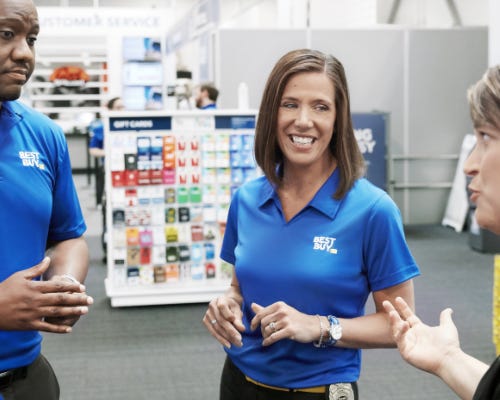
Corie Barry, CEO of Best Buy

for exemplifying resilience and loyalty throughout her career

According to this fascinating Fortune article, early in her career, Corie Barry received a performance review that labeled her as a “risk to the organization.” Most people would take that as a sign that their days were numbered but Barry looked for the “nugget of truth” that contained the “things I need to work on” and “buckled down,” even creating her own development plan.

In 2012, when Best Buy seemed to be on its death bed, Barry buckled down again, choosing to stay with the retailer.

“If your purpose is stewardship, and leaving when things are bad is the ultimate crime,” she recalled.

Her perseverance, resilience, and loyalty paid off when, in June, she was named CEO of Best Buy and, at 44, the youngest female CEO in the Fortune 500. In September, she laid out a plan to Wall Street to grow her new charge from $43B in revenue to $50B by 2025.

That type of growth may seem like a long shot given all the talk of a “retail apocalypse,” but if her past is any indication, I wouldn’t doubt her for a second
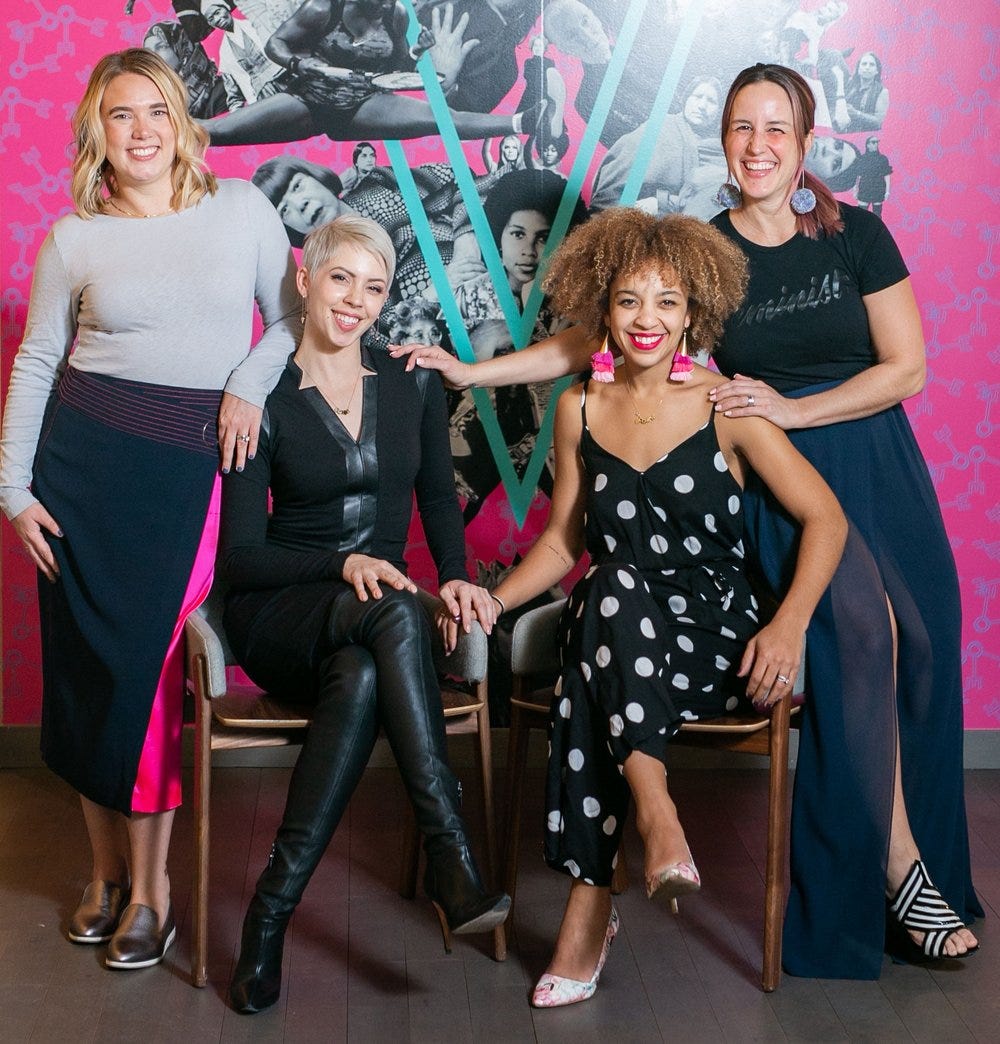
Alex West Steinman, Bethany Iverson, Liz Geil, and Errin Farrell, Co-Founders of The Coven

for bringing inclusivity and diversity to a place where it’s not often found

I grew up in the Midwest (Cleveland, to be specific) and while I will be eternally grateful for that fact and will defend my Ohio roots (and sports teams) to the day I die, I will also be the first to admit that it’s not perfect.

And one of the Midwest’s many imperfections is it’s utter lack of diversity. That’s why Alex West Steinman makes this list.

In 2017, along with three other co-founders, Alex founded The Coven, a co-working space in Minneapolis. But The Coven is more than a local WeWork, it’s mission is to “economically empower women by providing safe, accessible space for personal and professional transformation.”

The Coven’s business model reflects its mission — for every 5 memberships purchased, the business gives one to a member of the community that couldn’t afford it, “prioritizing people of color, folks from the LGBTQ community, those who are differently abled, immigrants, and veterans.”

Now boasting 2 locations, 600+ members (including 140 at no cost), The Coven is making important progress in bringing diversity and inclusivity to innovation, entrepreneurship, and its Midwest community

Marcela Sappone and Jessica Beck, Co-founders of Hello Alfred

for the courage to go against the grain and do the right thing

Hardly a week passes when we don’t hear of the legal, economic, and ethical problems of the giants of the Sharing Economy choosing to designate their labor forces as contractors instead of employees.

Every company except for one.

When Marcel Sappone and Jessica Beck founded Hello Alfred while getting their MBAs at Harvard Business School, they were the Alfreds — running errands, doing odd-jobs, and responding to requests at all hours of the day and night. And when they had proof of concept, they began to design a sustainable and scalable business model. One with W2 employees.

Yes, they met resistance from investors, even being turned down by some because of their choice but they remained committed to their model because they believed that the success of their business required relationships, not just transactions,

“There should not be a disconnect between the success of a company and the success of its workers. We believe treating our employees as our primary customer is how we can best satisfy our end users.”

Sappone lays out the full argument in this 2015 Quartz article and the benefit of her stick-to-it-tiveness is undeniable. Now in 20+ cities and with 200+ employees, Hello Alfred raised a $40M Series B round in 2018, giving it the highest valuation in its competitive set (e.g. Task Rabbit and Nextdoor)

Jean Brownhill, Co-founder of Sweeten

for solving two problems with one solution

For two years, we’ve need to repaint our house. We originally contacted the painter who painted the house when it was built in 2013. One year and no progress but lots of sketchy stories later, we gave up and called a 2nd painter. He looked over the job and called us back to say he wasn’t comfortable doing it because he was friends with the original painter. He referred us to a 3rd painter who also came to scope the work, only to engage in absurdly belligerent text messaging when trying to nail down the logistics of the job. We talked to a 4th painter in summer 2019 and he agreed to do the work in spring 2020.

Because of this experience, and far too many others like it, Jean Brownhill and the company she founded, Sweeten, are on my list of 2019 Faves.

An architect by training, Brownhill founded the company after her own frustrating experience with a contractor. The concept was simple — Sweeten would match home owners with renovation projects to vetted general contractors and would take care of all of the back-office work that customer service, documentation, and marketing.

Sweeten’s projects have grown from an average of $2000 to over $100,000 in the past eight years and the company now boasts $1B in construction business and 1,5000 vetted contractors in it’s pipeline, according to an article in Architectural Digest.

This success has led to the creation of Sweeten Accelerator for Women (SAW) and initiative to actively recruit female general contractors into the platform and redesign the matching algorithm to allow home owners to select the gender of their contractors.

In an industry in which women comprise only 3% of the workforce and make $0.91 cents on the dollar compared to their male counterparts (interestingly, one of the smallest gender pay gaps of any industry), the effort simply makes sense,

“A shift in the professional paradigm for general contractors would mean more opportunities for women to enjoy business ownership and greater wealth, and would diversify the client experience in important ways.”

Angela Ahrendts, former SVP retail at Apple

for following her heart

Much has been written about Angela Ahrendts — her childhood in Indiana, her education at Ball State, her early career in fashion in NYC through to her triumphant reign as CEO of Burberry, and her “shocking” move to tech when she joined Apple.

Yes, it is all amazing.

So was her decision to walk away from her role at Apple, where she was the company’s highest paid exec, earning 2x the salary of the CEO, and the company’s only female SVP. She walked away without apology or explanation.

Testament to the fact that, sometimes, leaving something is just as powerful and inspiring as starting something.


Hope you enjoyed my Top 5!

Who made your list? Who did I miss?

What Explaining the Poop Emoji to a 5-year old Taught Me About Innovation

What Explaining the Poop Emoji to a 5-year old Taught Me About Innovation

A few weeks ago, my 5-year old niece and I spent the afternoon together at a paint-your-own-pottery place. My niece was adamant that she wanted to paint something for her dad and immediately zoned in on a piece — a 3D poop emoji.

Remembering my sister’s parenting advice, I started with a question, “Why do you want to paint that for Daddy?”

Her response was simple enough, “Because it’s chocolate.”

I could have easily left it at that.

But I didn’t.

“Ok….why don’t you paint the pegasus for Daddy instead?”

She looked up at me with her big brown eyes, “Why?”

“Ummm, well, I just think it’s better.”

She scrunched her nose as she usually does when she doesn’t understand something, looked back at the poop emoji, and then silently picked up the Pegasus and took it over to our table.

With a sigh of relief — I knew my sister would be none to happy with me explaining the poop emoji — I thought the issue was resolved. I was wrong.

An hour later, as we stood hand-in-hand on the sidewalk waiting for her dad to come pick us up, my niece asked, “Aunt Robyn, why didn’t you want me to paint the chocolate for Daddy?”

Crap (pun somewhat intended). I have to do this. I have to be honest and explain this, and I am going to be in SO much trouble when we get home.

“Well, darling, that’s not chocolate. It’s poop.”

She scrunched up her nose, pursed her lips, gave a quick nod, and continued staring out into the parking lot.


Later that night, I confessed the moment to her parents. They burst out laughing.

“That would have been hilarious!” my brother-in-law proclaimed.

“Why didn’t you just let her paint it? It’s not poop to her” my sister sighed.

That thought literally never occurred to me. It never crossed my mind that letting her paint what she thought was chocolate would result in a heart-felt (and amusing) gift to her dad of a rainbow (her favorite color at the moment and thus what everything gets painted) poop emoji to display in his office.

Instead, I thought I was saving her from embarrassment by correcting how she saw something so that her understanding was in-line with the status quo.


I’ve felt horrible about this since it happened but the experience, the ease with which it happened and the smug self-righteousness I felt about “saving” her, taught me a very important lesson about why creativity and innovation are so often killed in organizations.

For the first time, I could understand and empathize with every Dr. No I’ve ever encountered. You know who I’m writing about, the person in your organization who, whenever a new idea pops up, says, “No, we can’t do that because…

  • …that’s not how it’s done in our company/industry”
  • …we tried that back in 19XX and it didn’t work.”
  • …the bosses will never approve it.”
  • …now is not the right time.”
  • …it’s took risky/expensive.”
  • …you’ll get fired if it doesn’t work and I don’t want that to happen to you.”

My whole career, I’ve hated Dr. No and used him/her as motivation to innovate. I would focus all my energy on finding a way to prove them wrong by doing something new AND making sure that new thing was wildly successful.

What I thought I was saving everyone from

But, in that pottery shop, I was Dr. No and I didn’t realize it. In fact, I felt proud of myself.

I felt proud because I was acting out of love. I wanted to protect someone who is innocent and precious. I wanted to spare her the embarrassment and shame that I thought would surely result from giving her dad a rainbow-colored piece of poop pottery.

And maybe that is where other Dr. No’s are coming from. Maybe the are saying “No” as a way to protect you and/or the company. Maybe they tried to do what you’re suggesting and they are still smarting from the pain of it not working out. Maybe they are trying to spare you the embarrassment and shame of pursuing the proverbial corporate rainbow-colored poop pottery.

And no matter how often you try to explain that the new idea is chocolate and not poop, they won’t hear you. Because they are anchored in a status quo reality that demands things be seen in one, and only one, way.

And in that moment you, the innovator, has a choice. You can scrunch your nose and move on to something safer or you can defiantly insist on painting that poop, confident that it will become a rainbow work of art that is treasured by the people that matter the most.

And, hopefully, you can have a bit of compassion for Dr. No who is simply trying to help you because she loves you.


EPILOGUE

A few weeks after the poop pottery incident, my sister told me that my niece asked to send a text message to her dad. My niece’s text messages are entirely comprised of emojis and after a few seconds of tapping out flowers and suns and rainbows, my niece’s finger stopped, hovering briefly over the screen.

“What’s wrong, honey?” my sister asked

“Do you know what this is?” my niece responded, pointing to the poop emoji

“What do you think it is?”

“Aunt Robyn said it’s poop…”

“Well, a lot of people think that’s what it is. but your Daddy told me that he read an article that it was originally designed to be chocolate ice cream on top of an ice cream cone. So you can think of it that way too.” (my sister swears this is a true story).

“Ok. Then it’s chocolate ice cream!” my niece exclaimed before adding at least a dozen chocolate ice creams to her text

Well done, little one. Well done.

This Customer is Key To Your Success.  And You Forgot All About Them

This Customer is Key To Your Success. And You Forgot All About Them

“There is only one boss. The customer.” – Sam Walton

With all the buzz around human-centered design, customer-centric businesses, and external-facing organizations, corporate America is (finally) waking up to the importance and value of creating things that people actually want and that solve people’s problems.

Teams of innovators, ethnographers, socialists, researchers, and consultants scurry about gathering customer insights, soliciting customer feedback, and generating reports that can be funneled back to R&D, innovation, and product development teams to inform the development of the Next Big Thing.

While this is all important work, amidst all of this activity, one customer is consistently overlooked. And it is this customer that often decides the fate of the Next Big Thing

There is only one first customer. Your boss.

Let’s start with what a customer is:

“The recipient of a good, service, product, or idea obtained from a seller, vendor, or supplier via a financial transaction or exchange for money or some other valuable consideration.

Yes, you should spend a lot of time getting to know the people outside your company who will eventually be asked to exchange money for the good, product, or service you are creating.

You also need to spend time getting to know the people inside your organization who you are currently asking to exchange money (give you a budget) or some other valuable consideration (time, people, permission) for your idea and its development.

And you need convince them that “a financial transaction” is worth it because, if you don’t they can and will spend their money elsewhere.

Your boss is a tough customer

No matter what type of company you are in — from a company of 10 to a company of 10,000 — you are faced with limited resources. A dollar spent in one place means a dollar not spent in another place. A person allocated to one team means one less person on another team.

Managers have to make resources allocation trade-offs all the time but are often moving pieces between functions and teams where they know the ROI of additional investments. This situation changes dramatically when a manager must decide whether to invest resources into a new and uncertain venture or to invest in the core, and much more certain, business.

Convincing your boss to buy your idea, especially if that idea is a new venture, is tough because you’re asking your boss to buy (or invest in) something with an uncertain ROI rather than buy (or invest in) something with a more certain ROI. But you can be successful if you understand your boss.

Your boss can be understood (and their decisions anticipated)

First, get comfortable with the fact that your boss is a human being. And, just like other human beings, your boss makes lots of decisions, believes that these decisions are based on logic and reason, and actually bases most decisions more on emotion and instinct.

As frustrating as this may be when you are at the receiving end of these decisions, take comfort in the fact that you can actually use the tools you use to understand external customers to understand, and even anticipate, your boss’ decisions.

Here’s how:

  1. What is the current business situation? While this is usually an easy question to answer, it can be hard to anticipate what impact it will have on your boss’ willingness to invest. Just as most people are hesitant to invest in something new when the current business environment is poor, many people are equally hesitant to invest when business is booming. This is usually because investments in the core business are generating more than usual upside and that’s great for your boss and/or there is no urgency to do anything new because people assume the good times will go on forever (news flash: they wont’). So while you can’t anticipate what impact the answer to this question will have on your odds of securing investment, you do need to know the context within which you are asking.
  2. What is your boss being asked to deliver? How is she measured and rewarded? Is your boss expected to deliver revenue increases? She’ll be drawn to new ideas that increase revenue. Cost savings? Then pitch ways to improve efficiency. How much time does she have to deliver results? If she needs to show results quarterly, you have to generate results quickly. If she has a year to show improvement, you have a longer runway to show results.
  3. What is your boss’ reputation? Does she like it? Humans are hard-wired to be social creatures so, whether we admit it or not, we really care how other people see us. What is your boss’ reputation — is she known for being a steady hand that consistently delivers or a renegade willing to rock the boat and take risks? And how does she feel about her reputation? Does she like it or does she see herself differently? If you have a boss that likes being seen as reliable and a defender of the status quo, you’re going to have a much harder time selling your new idea than if you boss is seen (or wants to be seen) as the next Steve Jobs.

With the answers to these questions, you can figure out the likelihood that your boss will buy your idea. If you boss is managing a business that is struggling, is expected to increase revenue after years of decreases, and is happy to be known as someone who always delivers, it’s unlikely she’ll be willing to invest resources in a new and unproven idea. But if your boss is managing a struggling business, is expected to develop new revenue streams that will replace the old ones, and enjoys a reputation as a someone who challenges the status quo, odds are she’ll support a reasonably well-thought out proposal for initial investment in a new venture.

Bottom line…

Before you get the opportunity to sell a new product or service to external customers, you need to sell your idea to internal customers…your boss. Take the time to understand you boss, the things that motivate her and the issues and challenges that she faces. Then, just as you create a product or service to solve your external customers’ problems, you can create a pitch that shows your boss how your idea solves her challenges.

Approach your boss as you would a customer and you’re likely to get the support you need. Forget that your boss is your first customer and you may never get the chance to pitch to the ones you’ve spent so much time studying.

Are You an Entrepreneur or a Wantrepreneur?

Are You an Entrepreneur or a Wantrepreneur?

A few weeks ago, a friend sent me an HBR Online article that argued that there is no such thing as a Corporate Entrepreneur because people who are trying to innovate within big companies don’t take on the same level of personal or financial risk as “real” entrepreneurs.

Having spent time as a Corporate Entrepreneur launching Swiffer at P&G, I had a pretty strong NSFW reaction to the article. But, in an uncharacteristic fit of maturity, instead of ripping off a response, I decided to send the article to friends who are currently Corporate Entrepreneurs and ask for their thoughts. What I received back was also NSFW.

But it got me thinking….are we even debating the right thing?

What is an Entrepreneur?

There are lots of definitions floating around but the one I have heard used most often is from Professor Howard Stevenson, referred to as “the godfather of entrepreneurship studies” at Harvard Business School:

Entrepreneurship is the pursuit of opportunity beyond resources controlled

There it is. No mention of where the entrepreneur is working (start-up vs. corporation). No mention of the level of personal or financial risk taken on. No mention of the pace of work or the degree or politics and bureaucracy endured. An Entrepreneur is simply someone who recognizes an opportunity and pursues it even though they do not currently have all the resources they need.

Why should we care?

Great, we have a common definition of Entrepreneur. So what? Isn’t this just some theoretical debate best left to academics?

Not really. Defining what an Entrepreneur is (and is not) is important because if the label is applied too broadly then it risks becoming devalued. A buzzword said while rolling your eyes and discussing your weird unemployed cousin.

Entrepreneurship is hard work and it’s understandable that the people who pursue it want to be known by a term that communicates the effort and sacrifices required and that commands respect.

So we need to draw a line between the ingroup (Entrepreneurs) and the outgroup but we need to be sure that line is drawn appropriately and not based purely on what makes us feel special.

Beware the Wantrepreneurs!

Entrepreneurs PURSUE opportunities. They take action. They DO something new (innovation). They make things (innovation) happen.

Wantrepreneurs talk about opportunities. They go on field trips to Silicon Valley and create innovation spaces painted in bright colors and filled with beanbag chairs. They got to pitch competitions and lurk around at meet-ups. They host ideation sessions and share photos of all the post-its notes on the walls. They create and parade around shiny objects that get people excited but that have no chance of ever generating the measurable and meaningful impact required to be an innovation. They pretend to be Entrepreneurs. And they are everywhere — founding start-ups, in start-ups, and in companies.

Bottom line…

The line defining who is an entrepreneur and who isn’t should not be drawn based where they work or how the work gets done.

The line should be drawn based on what gets done. The should divide the Entrepreneurs who PURSUE opportunities and the Wantrepreneurs who PRETEND to innovate.

Which one are you?