VTS with the Best: An Interview with Suzi Hamill

VTS with the Best: An Interview with Suzi Hamill

Last week, I wrote about Visual Thinking Strategies (VTS), a process of using art to teach visual literacy, thinking, and communication skills.

Typically, used in primary school classrooms, VTS has made its way into the corporate setting, helping individuals and teams to build and strengthen their problem solving and critical thinking skills, ability to communicate and collaborate, and effectiveness in delivering and receiving feedback.

While I did my best to capture the Why, What, and How of VTS in that post, there’s no substitute for learning from an expert.  That’s why I asked Suzi Hamill , former Head of Design Thinking at Fidelity and the woman who introduced me to VTS, to share her experience using the tool.


Hi Suzi.  Thanks for sharing your VTS wisdom and experience today.  I understand you’ve been doing a fair bit of VTS-ing lately.

Suzi: Yes!  Just a few months ago I was at Oxford University coaching 30 Chief Marketing Officers from large global corporations on how to apply Visual Thinking Strategies to their work and their teams.  And just last week, I led a session with a group of women on the West Coast of the US.

That’s one of the things I find so fascinating about VTS.  It was created to help people learn about art and was designed to be used in schools, but it can have such a powerful impact in a wide variety of businesses.

Suzi: Absolutely.  In a business context, there are massive systems and massive problems, and everyone has their own interpretation of what’s going on.  (imagine doctors deliberating over a diagnosis, investment analysts debating a company’s intrinsic value, retailers predicting the next fashion trend…) This creates conflict.  How do you pull together a range of people and ideas to forge the best path forward? VTS is a great, simple but rigorous method to help business groups look at big problems. VTS is a way to have open exploratory conversations with a diverse set of people

This is especially true in organizations that are very execution oriented. Often organizations haven’t developed the time, space or habit to work through ambiguity. VTS opens space for there to be ambiguity and dialogue.  It gives people permission to explore ideas, be wrong, and hear different points of view.

All of those behaviors are essential to making good business decisions.  I wonder, have you found that some people need “permission” more than others?

Suzi: I think everyone can benefit from the VTS experience and there are some circumstances where it can be transformational.

We are often taught not to question authority. But there is a delicate balance between challenging authority and understanding perspectives At Fidelity, our first experiment focused on using it as a way to prompt open conversation when there was a power imbalance in a room.  We rolled VTS out to our Design Team of about 100 people as a way to help junior designers to talk to the CEO or senior executives about their work and not get defensive.  We trained them to ask the VTS questions, especially “What do you see that makes you say that?”  We found that it was a great way for designers to learn how to get feedback on their designs.

Once we started having success with VTS, it was integrated into Fidelity’s 6-month long training program for the top 100 potential leaders.

That’s where we found the next circumstance – using VTS with leadership teams.  We found that VTS acts as a practical way to introduce the idea that you’re not just a do-er now, you’re a thinker and, as a result, you’re going to be faced with ambiguity.  Instead of shying away from it, you need to see that ambiguity is not only ok, but it is also fertile ground for us to grow our business.

That’s great but, as we both know, just because you learn something in training doesn’t mean you actually do it in real life.  Have you seen VTS make that jump?  Get people to move from knowing to doing?

 Suzi: I have.

At Fidelity, we would VTS customer research.  We would use the principle of VTS more than follow the strict methodology. We’d post our research on walls – sticky notes, photos of customers, flowcharts, everything, and we would bring in stakeholders and use the VTS process to tease out insights.  We give people time to LOOK and internalize what they were seeing before we told them what to think. By asking questions, we would discover what they were interpreting, identify unconscious biases, and learn what they already know or want to know about the customer.

At the event in Oxford, we VTS-ed the Business Model Canvas because most of the CMOs weren’t familiar with it.   Just by looking at it, they teased out its purpose, what was important and what wasn’t, what was confusing, and what wouldn’t work.  They walked away with a deeper internalization of its meaning

How is VTS able to do that?  To help people quickly internalize new insights or behaviors?

Suzi: The best way I can explain it is that VTS is like yoga.  When you teach someone yoga, with consistent practice they develop better posture and they walk and move fluidly and with strength.  So, when they’re going through their day, they become more aware of their posture and adjust but they don’t go into a whole vinyasa flow.

VTS is similar because when you use it with people, you’re teaching the mechanics of dialogue, of using evidence to progress, of managing ambiguity and conflict.

It takes time to tease out the power of the process but in the end, I’ve seen it help people realize that you don’t have to agree or disagree right away.  Instead, it gives them space to express an opinion and teaches them to ask questions and to ask for evidence in a way that is psychologically safe.

OK, but is it as simple as asking the 3 VTS questions?

Suzi: I wish.  You need somebody who is a skilled facilitator, who can keep the group moving forward and exploring ideas.

Leaders know they should stimulate conversation… solicit other people’s opinions, but they don’t know how. In meetings leaders will voice their own opinions, rely on the loudest voices, and steer the conversation. People will pick up on these signals. They will stop exploring and focus on giving the right answer.

Often, when people are running meetings they try to participate.  But that’s like trying to breathe underwater.  You can’t facilitate and participate.

What have you learned & applied?

Suzi: If you want to get people to engage in a great dialog, try giving them something to look at first. It can be a metaphor or real reflection. But give them something specific to point to anchor their thoughts.

Give people time to look and think before they speak or act. Silence is Golden. Silence is not the enemy. Give people time to silently observe something. Even 1 min can make a huge difference in how people respond.

You don’t need to compliment people on their thoughts to keep them engaged. Ask them for more… What do you see that makes you say that? What more can we find? People are not often asked for their opinions. That act alone is incredibly engaging.

As a leader it is just as important to get the obvious out on the table so that you can get to true insight.

TO LEARN MORE ABOUT VTS OR TO EXPERIENCE IT FOR YOURSELF…
Back to Basics: What is Design Thinking?

Back to Basics: What is Design Thinking?

Last week, I published a post with a very simple goal – define innovation so we can stop debating what it means and start doing it.

The response was amazing.  So, I figured that this week I would tackle another buzzword – Design thinking.

We’ve all heard it and we’ve probably all said it but, like “innovation’ we probably all have a different definition for it.  In fact, in the last few months alone I’ve heard it used as a synonym for brainstorming, for customer interviews, and for sketching while talking.  Those things are all part of Design thinking but they aren’t the entirety of Design thinking.


What I tell my clients

When a client asks if we’re “doing Design thinking,” here’s what I say;

“Yes, because Design thinking is a way of solving problems that puts customers and stakeholders, not your organization, at the center of the process and seeks to produce solutions that create, capture, and deliver value to your customers, stakeholders, and your company.”


The Basics
  • What: One could consider the official definition of Design thinking to come from Tim Brown, Executive Char of IDEO, who stated that “Design Thinking is a human-centered approach to innovation that draws from the designer’s toolkit to integrate the needs of people, the possibilities of technology, and the requirements for business success”
  • Why: Useful in solving “wicked problems,” problems that are ill-defined or tricky and for which pre-existing rules and domain knowledge will be of limited or no help (or potentially detrimental)
  • How:
    • Inspiration: Understand the problem by building empathy with stakeholders (deeply understand their functional, emotional, and social Jobs to be Done) and document that understanding in a brief that outlines goals (ideal end state), bounds (elements to be avoided), and benchmarks against which progress can be measured
    • Ideation: Generate ideas using brainstorming to develop a vast quantity of ideas (divergent thinking) and then home in on the ideas at the intersection of desirability, feasibility, and viability that best fit the brief (convergent thinking)
    • Implementation: Prototype ideas so that they can be tested, evaluated, iterated, and refined in partnership with customers and stakeholders, ensuring that humans remain at the center of the process.
  • When: At the start of any R&D or development process
    • Traditionally, design was involved only in the late stages of development work, primarily to improve a solution’s functionality or aesthetic. Design Thinking’s ability to pull the designer mindset into the earliest phases of development is, perhaps, one of the biggest impacts it has made on business and technical fields
  • Where: Can be done anywhere BUT, because it is a human-centered approach, it must involve multiple human beings through the process
  • Who: Anyone who is willing to adopt a “beginner’s mind,” an attitude of openness to new possibilities, curiosity about the problem and the people with it, and humility to be surprised and even wrong


Important Points & Fun Facts
  • Design Thinking IS a human-centered design approach. This means that it seeks to develop solutions to problems by involving the human perspective at every single step of the process
  • Design thinking is NOT synonymous with user-centered design though user-centered design could be considered a subset of Design Thinking because it gives attention to usability goals and the user experience


  • Design Thinking was NOT invented by IDEO, but I would argue that they have done more to popularize it and bring it into the mainstream, especially into business management practices, than any other person or firm.
  • Design Thinking IS the product of 50+ years of academic and practical study and application. Here’s some fun facts:
    • 1935: The practice of Design thinking was first established by John Dewey as the melding of aesthetics and engineering principles
    • 1959: The term “Design thinking” was coined by John E. Arnold in his book Creative Engineering
    • 1991: the first symposium on Design Thinking was held at Delft University in the Netherlands
    • 2000s: Design thinking is widely adopted as an innovation approach thanks to books by Richard Florida (2002), Daniel Pink (2006), Roger Martin (2007), Tim Brown (2009), and Thomas Lockwood (2010)
    • 2005: Stanford’s d.school begins teaching Design thinking as a general approach to innovation


  • Design Thinking is NOT just for radical/breakthrough/disruptive innovation
  • Design Thinking IS useful for all types of innovation (something different that creates value) resulting from wicked problems. In fact, as far back as 1959, John E. Arnold identified four types of innovation that could benefit from a Design thinking approach:
    1. Novel functionality, i.e. solutions that satisfy a novel need or solutions that satisfy an old need in an entirely new way
    2. Higher performance levels of a solution
    3. Lower production costs
    4. Increased salability


If you want to learn more…

As noted above, there are lots of resources available to those who are deeply curious about Design thinking.  I recommend starting with Tim Brown’s 2008 HBR article, Design Thinking, and then diving into IDEO’s extremely helpful and beautifully designed website dedicated entirely to Design thinking.


Here’s what I’d like to learn…
  • Was this helpful in clarifying what Design Thinking is?
  • What, if anything, surprised you?
  • What else would you like to know?


Drop your thoughts in the comments or shoot me an email at robyn@milezero.io

Back to Basics: What is Innovation?

Back to Basics: What is Innovation?

When I worked on P&G’s WalMart sales team, one of my bosses was a big guy with an even bigger personality.  He shared his opinions loudly and broadly and one of his opinions was that we needed to stop using the word “breakthrough.”

“If I have to hear one more time about some new ‘breakthrough’ soap, I will throw you out of this office myself!” he would bellow.

Years later, I can’t help but wonder what he would think of the word “innovation.”

In May 2012, The Wall Street Journal published an article positing that, as the word “innovation” increased in usage, it decreased in meaning.  The accompanying infographic said it all:

  • 33,528: Times “innovation” was mentioned in quarterly and annual reports in the previous year
  • 255: Books published in the last 90 days with “innovation” in the title
  • 43%: Executive who say that their company has a Chief Innovation Officer or similar role
  • 28%: Business schools with “innovation,” “innovate,” or “innovative” in their mission statements

That may seem like a lot but, remember, that data is nearly 8 YEARS OLD!

The desire for and investment in Innovation in all its forms – accelerators, incubators, startup/venture studios, corporate venture capital teams – has only grown since 2012.

While this may seem like a good thing, the fact that the success rate of innovations hasn’t changed, means that most people react to “innovation” the same way my boss reacted to “breakthrough” – if you bring it up, they throw you out.

To avoid getting thrown out of offices, one of the first thing I do with my clients when we begin working to build innovation into an enduring capability within their companies, is re-establish what innovation is and is not.

Innovation IS something different that creates value.

When people hear the term “innovation,” they tend to think of new-to-the-world gadgets that fundamentally change how we live our lives.  Yes AND it’s many other things, too.  Let’s break down the definition:

  • “Something” includes products and technology, it also includes services, processes, revenue models, and loads of other things. Consider this, many would argue, quite convincingly, that the Toyota Production System was one of the biggest innovations of the 20th century
  • “Different” often surprises people. After all, even Merriam Webster defines innovation as “something new.” But here’s the thing, one of the most commonly cited innovations, the iPhone, wasn’t “new.”  Even Steve Jobs admitted it when he said, in his keynote speech, that Apple was introducing three products – a widescreen iPod with touch controls, a mobile phone, and an internet connected device.  The iPhone was, however, different because it combined those three devices into one.
  • “Creates value” is probably the most important part of the definition. All innovations solve problems.  Solving problems creates value.  If you solve a big problem, either because it’s a problem lots of people have or it’s a very painful problem a few people have or something in-between, you create a lot of value for others and for yourself.
Innovation IS NOT a one-size-fits-all term.

Think of it this way, both a Kia and a Maserati are cars, but you wouldn’t expect to pay Kia’s price tag and get a Maserati (and vice versa).  Similarly, both a convertible and a pick-up truck are automobiles, but you wouldn’t use your convertible to carry building equipment to a construction site.

With a definition as broad as the one above, it’s possible for “innovation’ to become even more meaningless as it gets applied to more things.  That’s why it’s important to identify different types of innovation.

There’s no universally accepted set of innovation types, which is why I recommend companies consider defining at least three types that reflect their business and forward-looking strategies.

One of the most common set of innovation categories is based on the degree of change required for implementation:

  • Core Innovation requires minimal or no change to the current business model (customers, offerings, revenue model, resources and processes). Also known as Continuous or Incremental Innovation, this is the unglamorous but deeply important work of constantly improving what you do and how you do it.
  • Adjacent Innovation changes a significant change to at least one element of your business model. It could be changing who you serve, like expanding from interventional cardiologists to general cardiologists, what you offer, like P&G’s expansion into “durable goods” when it launched Swiffer, or how you offer or deliver it.
  • Radical innovation is the stuff that gets all the press. These innovations fundamentally change the business, like IBM moving from computers to business services.  These innovations are high-risk and require a lot of time, money, and patience to see to fruition.  This type of innovation is also called “Breakthrough” but, for obvious reasons, I shy away from that term.

There are many things that need to be done to shift innovation from buzzword to business capability. Defining innovation AND at least three different types is only the first step in moving from innovation theory and theater to building innovation into a true capability that drives sustainable growth.

Or, as I would tell my old boss, “It’s the first step.  But it’s a breakthrough one.”

Originally published on December 30, 2019 on Forbes.com

10 Moments of Innovation Zen: Military

10 Moments of Innovation Zen: Military

Innovation is something different that creates value. Sometimes it’s big, new to the world, world-changing things. Sometimes it’s a slight tweak to make things easier, faster, cheaper or better.

Sometimes, it’s both.

It’s no secret that the military and NASA are birthplaces of incredible inventions (something new) and innovations (something different that creates value). Most people know that Velcro, nylon, and powdered drinks (Tang!) originated at Nasa, and that Jeep, GPS, and the internet come to us from the military.

But did you know that these 10 everyday innovations have their origin in the military?

Duct Tape

Invented in 1942 to seal ammo boxes with something that could resist water and dirt while also being fast and easy to remove so soldiers could quickly access ammunition when they needed it. Originally, it was made by applying a rubber-based adhesive to duck cloth, a plain and tightly woven cotton fabric, and has evolved over the years to be used for everything from repairing equipment on the moon to purses.

Synthetic Rubber Tires

Speaking of rubber, prior to WWII, most rubber was harvested from trees in South America and shipped to southern Asia where the majority of rubber products were produced. When the Axis powers cut-off access to Asia, the US military turned to Firestone, Goodyear, and Standard Oil to create a replacement substance. The recipe they created is still used today.

Silly Putty

Image Credit: thestrong.org

Like most inventions, there were a lot of failed experiments before the right synthetic rubber recipe was found. Silly Putty is the result of one of those experiments. A scientist at GE developed the strange substance but quickly shelved it after it became clear that it had no useful military application. Years later, GER execs started showing off the novelty item at cocktail parties, an advertising exec in attendance saw its commercial potential and bought the manufacturing rights, packaged it into eggs and sold it as a toy. 350 million eggs later, we’re still playing with it.

Superglue

The result of another failed experiment, Superglue came onto the market in 1958 and has stuck around ever since (sorry, that pun was intended). Military scientists were testing materials to use as clear plastic rifle sights and created an incredibly durable but impossibly sticky substance called cyanoacrylate. Nine years later it was being sold commercially as Superglue and eventually did make its way into military use during the Vietnam War as a way to immediately stop bleeding from wounds.

Feminine Hygiene pads

Image Credit: Museum of American History

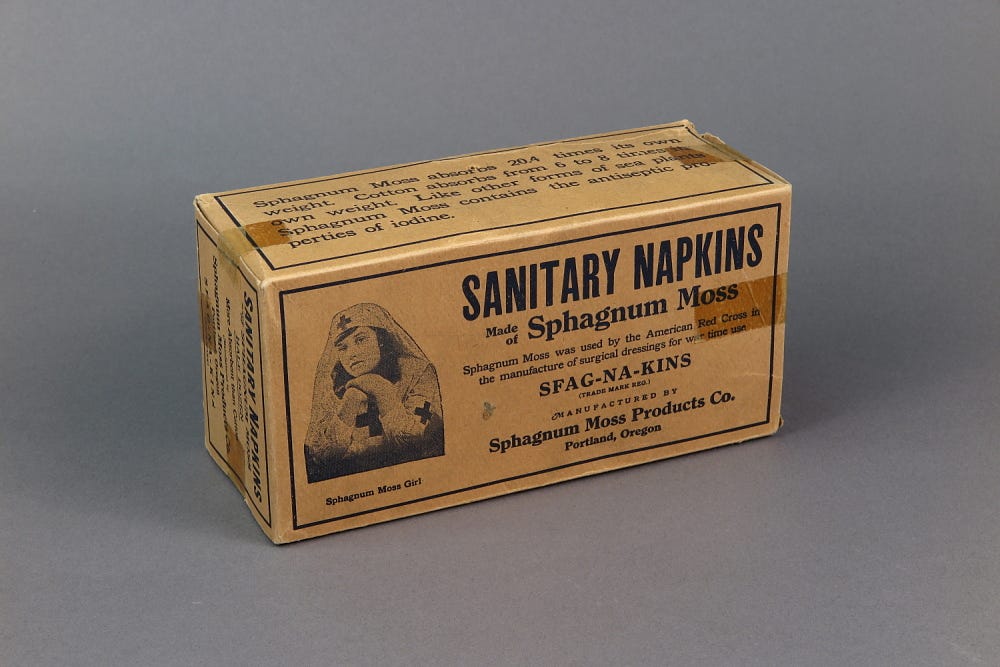
Before Superglue was used to stop bleeding, bandages woven with cellulose were used on the battlefields and hospitals. Seeing how effective the bandages were at holding blood and the convenience of having so many on hand, US and British WW1 nurses began using them as sanitary napkins and bandage makers adapted and expanded their post-War product lines to accommodate.

Undershirts

Image Credit: Foto-ianniello/Getty Images

While people have been wearing undergarments for centuries, the undershirt as we know it — a t-shaped, cotton, crewneck — didn’t come into being until the early twentieth century. Manufactured and sold by the Cooper Underwear Co., it caught the Navy’s eye as a more convenient and practical option than the current button-up shirts. In 1905, it became part of the official Navy uniform and the origin of the term “crewneck.”

Aerosol Big Spray

Image Credit: National WWII Museum

Soldiers fighting in the Pacific theater of WWII had a lot to worry about, so they were eager to cross mosquitos and malaria off that list. In response, the Department of Defense teamed up with the Department of Agriculture to find a way to deliver insecticide as a fine mist. The first aerosol “bug bomb” was patented in 1941 and, thanks to the development of a cheaper plastic aerosol valve, became commercially available to civilians in 1949.

Canned Food

Image Credit: Pacific Paratrooper — WordPress.com

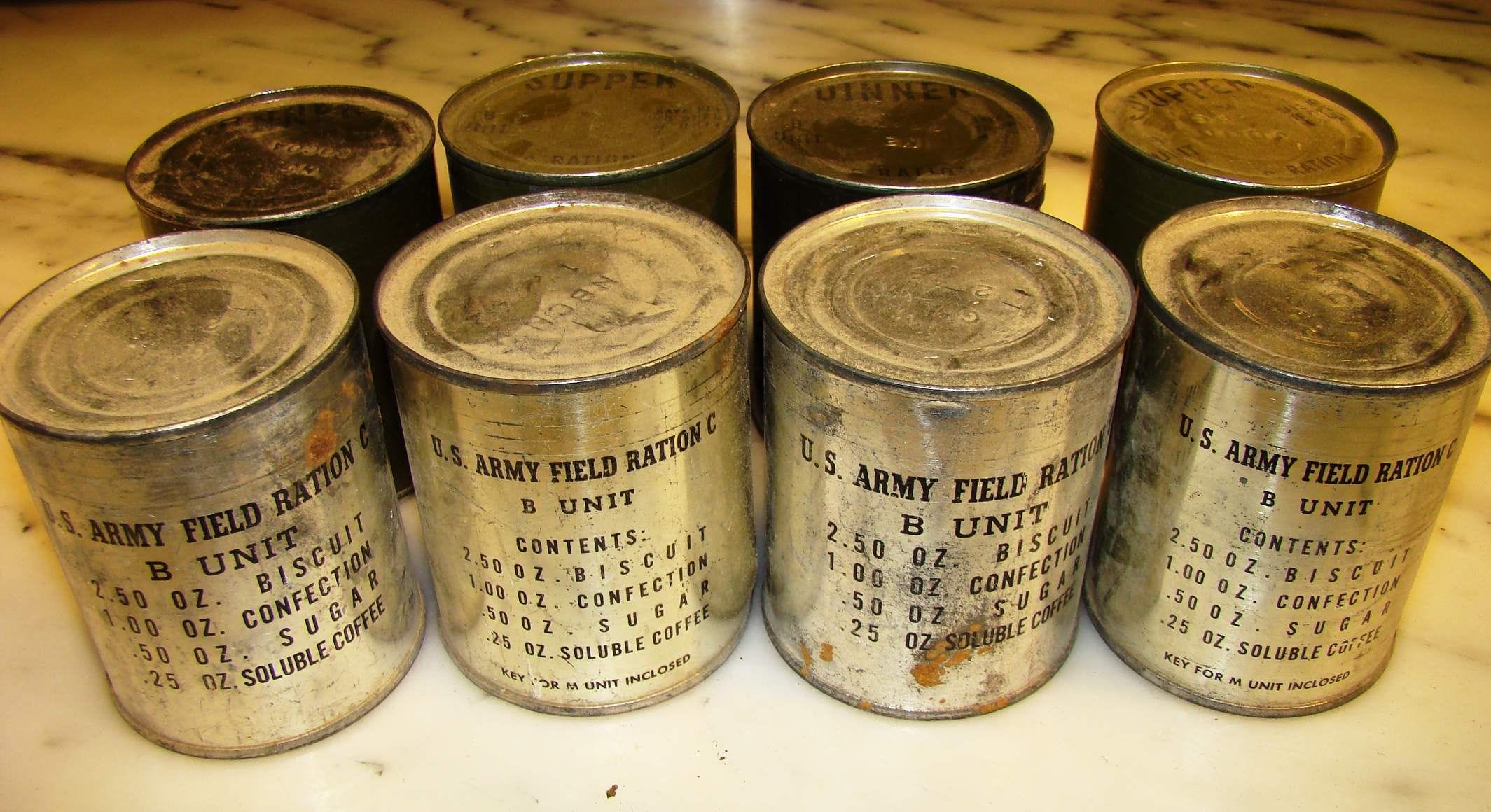
While it’s not surprising that canned foods were originally created for the military, it may surprise you to learn that it was Napoleon’s armies that first used the concept. In response to the French Government’s offer of a large cash reward for anyone who could find a way to preserve large quantities of food, an inventor discovered that food cooked inside a jar wouldn’t spoil unless the seal leaked, or the container was broken. But glass jars are heavy and fragile, so innovation continued until WW1 when metal cans replaced the glass jars.

Microwave

RadaRange on the Nuclear Ship NS Savannah

This is another one that you probably would have guessed has its origins in the military but may be surprised by its actual origin story. The term “microwave” refers to an adaptation of radar technology that creates electromagnetic waves on a tiny scale and passes those micro-waves through food, vibrating it, and heating it quickly. The original microwaves made their debut in 1946 on ships but it took another 20 years to get the small and affordable enough to be commercially viable.

Wristwatches

Image Credit: Hodinkee

Watches first appeared on the scene in the 15th century but they didn’t become reliable or accurate until the late 1700s. However, up until the early 20th century, wristwatches were primarily worn as jewelry by women and men used pocket watches. During its military campaigns in the late 1880s, the British Army began using wristwatches as a way to synchronize maneuvers without alerting the enemy to their plans. And the rest, as they say, is history.


So, there you have it. 10 everyday innovations brought to us civilians by the military. Some, like synthetic rubber, started as intentional inventions (something new) and quickly became innovations (something new that creates value). Some, like superglue and silly putty, are “failed” experiments that became innovations. And some, like undershorts and feminine products, are pure innovations (value-creating adaptations of pre-existing products to serve different users and users).

Sources: USA TodayPocket-lint.com, and Mic.com

Creative or Reactive: Which One Are You Right Now?

Creative or Reactive: Which One Are You Right Now?

Creative and Reactive

Same letters.

Different order.

Very different results.

These are strange times.

A relentless stream of news and updates are coming at us, warning us about COVID-19, a declining stock market, rising unemployment, and the financial crunch facing millions and millions of individuals and families.

On the other hand, we’re also getting daily notifications from companies about what they’re doing in the face of all of this news, tips for working from home and maintaining our mental health, and encouragement to support our friends, families, neighbors, and strangers in new ways.

Should we be scared or stoic? Isolated or connected? Hoarding or sharing?

Whatever you choose (and it is your choice), I encourage you to also be creative.

I’m not talking about being creative in the capital C way and take up painting, sculpting, composing, or any of the other activities we typically associate with the fine arts.

I’m talking about calmly assessing your situation, clearly acknowledging the constraints that are requiring change, and then exploring the “new normal” you can create.

This is what innovators do and you, yes YOU, are an innovator.

Innovators know that creativity thrives within constraints. If anything is possible and everything is permissible, you can do whatever you want! But that’s not how the world is. Not now and not before COVID-19.

We, people and businesses, have always faced constraints because we’ve never had infinite resources, money, or time. But we acknowledged the constraints and created within them. That’s what we have to do now.

Here’s some inspiration:

Businesses

Devil’s Food Catering: From event caterer to consortium offering takeout meals

Caterers have to order food well before events take place so when events are cancelled, caterers are left with a lot of food that they’ve already paid for and without the event income that was going to cover their costs.

Devil’s Food Catering in Portland OR faced exactly this situation. Instead of letting the food go to waste or trying to become a take-out shop on their own, they created Handbasket by teaming with other with other Portland area restaurants, breweries, distilleries, bakeries, and other providers to create “handmade menus for quality in-home dining experiences during this of social distancing.”

Gyms, Fitness Studios, and Personal Trainers: From in-person to on-line communities

Some people are gifted with the motivation to workout and some of us, well…aren’t.

In-person classes and personal training are often the solutions we rely on because we feel a sense of connection with our instructors, trainers, and classmates. As gyms close and social distancing becomes a way of life, the loss of live workouts can deepen our sense of isolation.

Recognizing this, local gyms, studios, and personal trainers in cities across the country are offering livestream classes so that we can continue to feel connected AND healthy AND active from the comfort of our own homes.

p.s. the link above is for the Boston area but I found similar articles for Philly, Washington, Houston, and even Wyoming

Speakers Who Dare: From Broadway event to Livestream to Movie

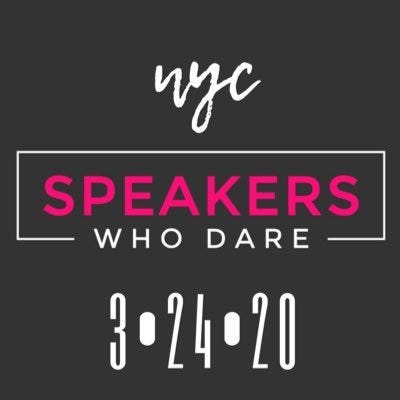
Spears Who Dare bills itself as TED meets Broadway, “a groundbreaking speaker series produced like a Broadway show, featuring speakers from around the world who want to ignite change and inspire new ways of thinking.”

Scheduled to take place on March 24, the organizers recognized that, like many other live events, their original plans for a live Broadway event needed to change. Last week, they shifted from live to livestream, planning a 6-camera shoot of each speaker and performer sharing their messages and art in an empty theater.

Then NYC closed the theaters. Within hours the organizers shifted again and asked each speaker to record a “mini-movie” that could be edited together to create “a full-blown Speakers Who Dare Film” to be shared with a global audience, viewing together on the original event date.

People

Seeing your coworkers when you can’t (or don’t want to) videoconference

Homemade games for when you’ve already played all the games you bought

More homemade games for when you really need to interact with people outside your own home

How and what will YOU create today?

Just in case you need a nudge…find the perfect gif starring the perfect celebrity expressing the perfect emotion and send it to someone who needs it


h/t to Kate Dixon and Megan Shea for sending their suggestions