I know that I’m not supposed to say that, especially because I tell other people that they absolutely must run experiments.
After all, experiments are an essential part of the innovation process. There are some things that you absolutely cannot learn unless you go out into the world, interact with other humans, and operate in a real-world setting.
But run an experiment, especially if it’s on something I created? No, thank you. I’ll just sit right here in the safety of my office and polish my idea to within an inch of its theoretical life.
It’s all of us
To understand why running experiments can be stress-inducing, itself helpful to understand what happens in our brains when we’re conducting them.
No matter the type of experiment you’re running, the context in which you’re experimenting, or what you’re trying to learn, simply by running an experiment you are saying to the world (or your team, or your boss, or you peers), “I’m not entirely certain that I’m right. I may be wrong.” That is a very uncomfortable, even vulnerable, position to be in and our brains, always on the look-out for danger, activate our fight-or-flight response, resulting in something that feels a lot like fear.
According to Scott Steinberg, bestselling author of Make Change Work for You, the seven most common fears people report feeling in the workplace are:
Fear of Failure
Embarrassment
Underperformance
Rejection
Change and Uncertainty
Confrontation
Isolation
When you run an experiment, especially if you’re in a function/company/culture where experimentation is not the norm, you are at risk of experiencing at least one, and often all, of the fears listed.
Don’t believe me?
The experiment that never happened
Imagine that you work for a big multi-national food company and you’ve been tasked with creating a new line of snacks targeting Baby Boomers and offering functional benefits like improved version, greater stability, better muscle tone. You’ve done the research and you know the ingredients that can deliver each of the desired benefits. You’ve done some small scale taste testing and you’re confident that the products taste good and have the right texture. You’ve even checked with Legal and they’re confident that you can make the claims you want to make.
The last thing you need to test is that people will pay what you need them to pay for the new products.
You could ask people what they’re willing to pay but you know you’ll get better data if you actually sell the new products to people, asking them to exchange their hard earned money for a bag of nuts. You decide that the fastest, easiest, and cheapest way to do this is to set up a little stand in the company cafeteria, sell your new products, and see what happens.
That’s when things come to a grinding halt.
“What if we don’t sell as much as we need to?” one person asks (fear of failure and underperformance).
“What if people don’t like the products?” says another (fear of embarrassment)
“What if no one buys?” says a third (fear of rejection)
“There is no way that Legal will let us do this. No one has ever done this before. Plus, we’re talking about selling something that contains allergens.” says a fourth (fear of uncertainty and confrontation)
“You’re right,” you finally agree. “It’s better than we keep this work on the down-low. If people find out what we’re doing, they may feel like we’re stepping on their toes and we’ll get shut down.” (fear of isolation).
True story (but I bet you already knew that).
I’ve seen the same thing happen at other clients and in other industries. People want to experiment. They know they need to experiment. But they don’t experiment. Instead, they come up with all sorts of reasons, some very real and true and some greatly exaggerated, why they can’t.
Experiment with experimenting
First, let’s be clear — there are are LOTS of good reasons why some experiments can not or should not happen. If you know for a fact that an experiment is going to break a law, put someone at risk, or potentially result in an unrecoverable financial loss, do not do it! Common sense, people.
But fears are not facts. They are feelings. Feelings that can be acknowledged, addressed, and overcome.
So how do you overcome the feelings that can get in the way of experiments?
Start with a Plan B.
I don’t know about you, but I always feel better when I have a fall-back plan. Many people decide on the type of experiment they need to run and then go for it. Until they hit a roadblock. Then they stop….not just the experiment but ALL experiments. This type of “all or nothing” mindset — if we can’t do this experiment we can’t experiment at all — creates incredible stress because it makes the mere act of experimenting super high stakes.
Instead, start by getting very clear and very specific on what you need to learn — not “Will people pay for this?” but “Will people pay $4.99 for an 8oz bag of nuts.” Then, brainstorm all the ways you could learn what you need to learn, without worrying about the quality of the data you’ll get. Once you have a long list of different possible experiments, assess how complex it would be to run each (high/medium/low) and the reliability/quality of the data you’ll get (high/medium/low). You now have a list of different experiments to run and a sense of the trade-offs inherent in each one. As a result, you should feel more confident in choosing an experiment to pursue because you already have your Plan B (and C and D) identified in case you discover a legal, regulatory, or financial reason that your stops you from pursuing your original experiment.
Change how you talk about experiments.
When people ask we need to run experiments, we often answer with things like, “because I don’t know if…” or “because we need to if….” There’s nothing wrong with those answers per se but admitting that you don’t know something or are unsure of something can feel really really risky. After all, uncertainty can be perceived as risky, dangerous, and even a sign of incompetence.
So try phrasing answers in a way to show that you are somewhere good and the experiment will move you somewhere better. For example, “We know that we need to sell an 8oz bag for $4.99 in order to make our numbers and based on your benchmarks we’re confident that we can do that, but we want proof and this experiment is the best way to get it.” Of course you don’t want to lie but you also shouldn’t discount all the work and learning you’ve done to get to this point. Share that knowledge, get credit for the work, and explain the benefit of continuing the journey.
Turn around your thinking.
Ok, this is going to sound a bit “woo” but, if you’re like me and tend to focus on the worst-case scenario (because then you’re prepared for it!), you need to get out of your head, see your feelings for what they are, and get focused back on the facts before you can move forward. One technique for this is a series of questions known as “The Turnaround”in which you ask (and answer) a series of 5 questions. The questions below are how they would have been phrased in the example above, the root of the question (the part that doesn’t change) is underlined:
Is it true that we will get shut down if we run this experiment? (Maybe)
Can I absolutely know whether it is true before I run the experiment? (No)
What happens when I believe that it is true that we will be shut down? (I don’t want to run the experiment)
What would I do if I didn’t believe that we’ll be shut down? (I would run the experiment)
What are 3 examples of when this thought in this context was not true (1. When our first concept got terrible results, 2. when our initial financial estimates didn’t achieve the required profit margin, 3. when the first taste tests got mediocre results)
By the end of this, you now have 3 facts that refute your 1 feeling. And as I like to say, “don’t bring feelings to a fact party ’cause we ain’t got time for that.”
In conclusion
Everyone gets uncomfortable at some point in the innovation process. For some people it’s the uncertainty at the start, for others it’s the process of setting KPIs without knowing whether you can hit them or not, and for others (like me) it’s the moment when you have to take your beautiful precious idea out into the world and face the fact that it might fail.
By experimenting with the way we approach planning for experiments, talking about them, and even thinking about them, both my clients and I have been able to lessen the fear and anxiety we feel when we don’t know what will happen next and find the courage to move forward, make things happen, and learn what needs to be learned.
Several years ago and courtesy of the TED Women Conference, I got my hands on SY Partner’s Superpowers Card Deck. Before forcing everyone on my team to run through the deck, I experimented on myself.
My Superpower? Complexity Busting.
And yes, I do truly love to create order from chaos or, as SY phrases it, “tame unruly thoughts.”
Which is why I now feel compelled to tame the unruly thoughts that many people have about customer research.
Most companies believe that it’s important to understand their customers and many of them invest millions of dollars in trying to do just that. Unfortunately, most of them are wasting their money by investing in the wrong tools.
Here’s a cheat sheet so you don’t make the same mistake
QUALITATIVE RESEARCH
In-depth, one-on-one interviews
WHY you should use it: To discover and explore what you don’t know. When you are exploring a new space (or one you haven’t explored in a while) and you need to discover both what is going on and why, one-on-one in-depth interviews are the best (and only) way to start to bring clarity to a situation.
HOW to do it: Don’t let the name fool you, these should rarely be truly one-to-one interviews. I prefer to structure them as two-on-ones: person 1 is being interviewed, person 2 is the interviewer and asks most of the questions, and person 3 takes notes and occasionally chimes in with questions that person 2 might have forgotten to ask.
WHEN to use it: At the beginning of any project that feels ambiguous or for which you don’t have a lot of pre-existing and up-to-date data to rely on. It’s also a good exercise to do at least once a year as a way of ensuring that your data actually is up to date and reflects changing customer attitudes and behaviors.
Pro Tips:
Face to face is best so that you can see non-verbal cues that indicate if someone is holding back information, struggling to understand, or having an epiphany.
Don’t rush these. Plan 1–2 hours for these interviews as the conversations need to be EPIC (empathetic, perspective-giving, insightful, and create connection).
Follow the rule of 10. Qualitative data tends ot be directional at best so don’t waste a lot of time and money interviewing hundreds of people. Instead, interview 10 customers then reassess to see if you need to interview more. In my experience, people 1–4 tend to provide the most new data, people 5–7 help focus you on the most important things, and people 8–10 confirm the most important things or add interesting spins that can be explored through other means.
Focus Groups
WHY you should use it:To develop, enhance, and refine ideas and prototypes. Creativity abounds when people can bounce ideas around and build on what others say. For this reason, group research, like focus groups, is best when you’re giving people something to react to but you’ve already done the homework to identify the right problem and you’re simply giving them a solution to which to respond.
HOW to do it:Focus groups should be heavily facilitated with structured exercises to keep the group focused. There’s lots of ways to host focus groups — in-person in research facilities, on-line communities, even group texts. What matters most is how you facilitate the group, ensuring that the collective energy is focused on generating the information and insights that will be most helpful.
WHEN to use it: After you have prototyped solutions to the challenges identified through the one-on-one interviews. You want to give people something to react to, but it doesn’t matter if it’s a 3D printed prototype or a few sentences on a piece of paper. What matters is that you have a facilitator guiding people through exercises designed to understand what they like, what they don’t like, what they think, and what they feel.
Pro Tip:Make your prototype as ugly as possible. In general, people don’t want to be mean or hurt your feelings. As a result, the more refined your prototype, the more likely people are to think that you spent a lot of time and effort creating it. They’ll go out of their way to find things that they like, even defaulting to “I think people will like this….” (which is code for “I don’t like this but I’m sure someone else will). If you want honest feedback (and you do), make the prototype ugly.
QUANTITATIVE RESEARCH
Surveys
WHY you should use it: To understand the relative priority of things and to build confidence in your recommendations. As mentioned above, qualitative research insights are directional and, even though they’re usually at least 80% right, some projects, executives, or companies want greater certainty before taking action. Surveys can get you that certainty in a far more efficient and effective way than additional qualitative research because they enable you to reach hundreds, even thousand, of people at once and collect data on a standard list of questions and answers.
HOW to do it: This depends on the complexity of your survey. Self-serve options, like Survey Monkey and Typeform, are great for simple (e.g. 10 question) surveys to a broad group of people (e.g. women 18–34) or to an existing database of people (e.g. customers who have returned warranty cards). For surveys that are more complex (dozens of questions, use question logic), require a large base (100+) of respondents and/or are directed to a hard to find or access population (e.g. cardiac surgeons, people who have spent over $300 on gluten-free products in the past 3 months), it is best to work with a quantitative research firm that has the expertise, experience, and technology required to design and field the survey as well as analyze the data.
WHEN to use it: When you are confident that you know the right questions to ask AND the right answer options to provide. In other words, after you’ve done qualitative research or when you’re doing something as a matter of course (e.g. post-purchase survey). And even then, it’s a good idea to include open-text response options just in case the answers you provide don’t include the answer your customers want to give.
Pro Tip: If you’re working with a qualitative researcher who claims they also do quantitative research, ask them to provide specific examples of past work that it at the same scope and complexity of the work you want to do. Quantitative research tends to become the “sole source of truth” in companies so it’s worth investing in the right experts for this type of work.
In closing…
Customer research is an incredibly complex field which means it’s easy to get overwhelmed and make the wrong decision. Hopefully this simple overview busts some of that complexity and quiets some unruly thoughts.
I’m curious…did this help you find the right type of research for your needs? What did I miss? What would you add? Share your thoughts and help all pf us get smarter and better at this important work!
According to research by Strava, the social network for athletes, most people will have given up on their New Year’s Resolutions by Sunday, January 19.
While that’s probably good news for all the dedicated workout enthusiasts who will be glad to get their gyms back, given that the most common New Year’s resolution is to exercise more, it’s a bit discouraging for the rest of us.
But just because you’re about to stop hitting the gym to drop weight and build muscle (or whatever your resolutions are), it doesn’t mean that you can’t focus on improving other muscles. May I suggest, your innovation muscles?
Innovation mindsets, skills and behaviors can be learned, but if you don’t continuously use them, like muscles, they can weaken and atrophy. That’s why it’s important to create opportunities to flex them.
One of the tools I use with clients who are committed to building innovation as a capability, rather than scheduling it as an event, is QMWD: the quarterly, monthly, weekly and daily practices required to build and sustain innovation as a habit.
Quarterly
Leave the office and talk to at least three of your customers. It’s tempting to rely on survey results, research reports and listening in on customer service calls as a means to understand what your customers truly think and feel. But there’s incredible (and unintended) bias in those results.
Schedule a day each quarter to get out of the office and meet your customers. Ask them what they like and what they don’t. More importantly, watch them use your products, and share what you hear and see with your colleagues.
Monthly
Share a mistake you made with your team and what you learned from it. Silicon Valley mantras like “Fail fast and fail often” make for great office décor, but let’s be honest: No one likes to fail, and very few companies reward it.
Instead of repeating these slogans, reframe them as “Learn fast and learn often,” and model the behavior by sharing what you learned from things you did that didn’t go as expected. You’ll build a culture of psychological safety, make smart risks acceptable and increase your team’s resilience — all things required to innovate in a sustainable, repeatable and predictable manner.
Do one thing just for the fun of it. In the research that fed into their book, The Innovator’s DNA, professors Jeff Dyer, Hal Gregersen and Clayton Christensen found that the most common characteristic among the great innovators of our time was their ability to associate, “to make surprising connections across areas of knowledge, industries, even geographies.” Importantly, their associative thinking skills were fed by one or more discovery skills: questioning (asking why, why not and what if), observing, experimenting and networking.
Fuel your associative thinking ability by doing something unrelated to your job or other obligations. Do something simply because it interests you. You might be surprised where it takes you. After all, Steve Jobs studied calligraphy, meditation and car design and used all of those experiences in his day job.
Weekly
Make one small change for one day. Innovation requires change, and if you’re an innovator, that’s the exciting part. But most people struggle with change, a fact that can be frustrating for change agents.
In order to lead people through change, you need to empathize with them and their struggles, which is why you need to create regular moments of change in your work and life. One day each week, make a conscious change. Sit on the other side of the conference room table. Take a different route to the bathroom. Use a black pen instead of a blue one. Even small changes like this can be a bit annoying, and they’ll remind you that change isn’t always the fun adventure you think it is.
Daily
Ask, ‘How can we do this better?’ Innovation is something different that creates value. This is good news because it means that all it takes to be an innovator is to do something different and create value. The easiest way to do that is to find opportunities for improvement.
The next time you’re frustrated with or confused by a process, ask, “How can we do this better?” Better can mean simpler, faster, cheaper or even in a way that is more enjoyable, but whatever it means, the answer will point the way to creating value for you, your team and maybe even your company.
Block time on your calendar for these quarterly, monthly, weekly and daily habits. After all, the best reflection of your priorities is what’s in your calendar. And, if you stick with this, you’ll be among those who achieve their New Year’s goals.
As I wrote in Part 1, I learned several valuable lessons about how to make requests when tapping into the wisdom of the crowd. These lessons aren’t unique to asking for input, though, the especially relevant for people working in and on innovation
But I didn’t start this journey to learn something, I started it to get out of writing an article (ironically, it resulted in me writing two).
This is the post I meant to write.
Innovation is something different that creates value.
“Value” is the key word in that definition. Something may be different, it may even be new to the world, but if it doesn’t create value, it’s not innovation.
How does something create value? It solves a problem.
Following are some of 2019’s innovations that solved problems, created value, and changed lives, according to the people who love them*
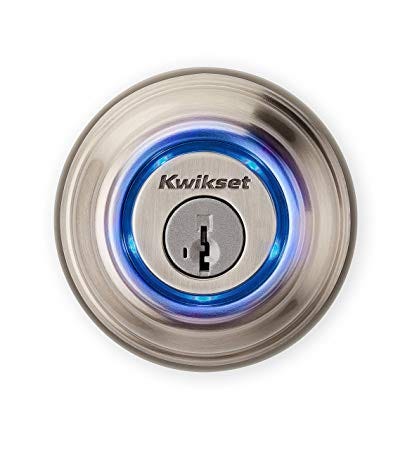
Kwikset Kevo to eliminate the need to carry keys and the fear of losing them.
“The main reason a blue-tooth lock for my house is life-changing is that I’ve always had a problem losing my house keys. There is nothing more annoying than leaving them at the office and having to call my wife or kids to unlock the door. Not only that, but it’s just so convenient to be able to swipe my smartphone to open the door.
As a techie, it’s a dream come true and gives me the feeling of living in a
futuristic world where I can unlock my door with an app. No more searching
for that familiar jingle in my pocket, but rather just my smartphone, which
should always be there!”
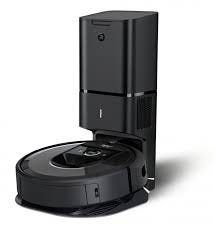
iRobot Roomba i7+ to save you time by cleaning your home and cleaning itself
“The Roomba i7+ has been profoundly game-changing to the cleaning of my
home, thanks to the introduction of the Clean Base. Although other robot
vacuums now have Automatic Dirt Disposal, the Roomba i7+ was the first from iRobot that could empty its waste into a bin. This completely took the
effort out of cleaning the home for weeks at a time, unlike other robot
vacuums where you have to empty the bin frequently. As it can hold up to 30
cleans worth of dirt, you can set it to schedule cleaning daily with
self-disposal lasting for many days.”
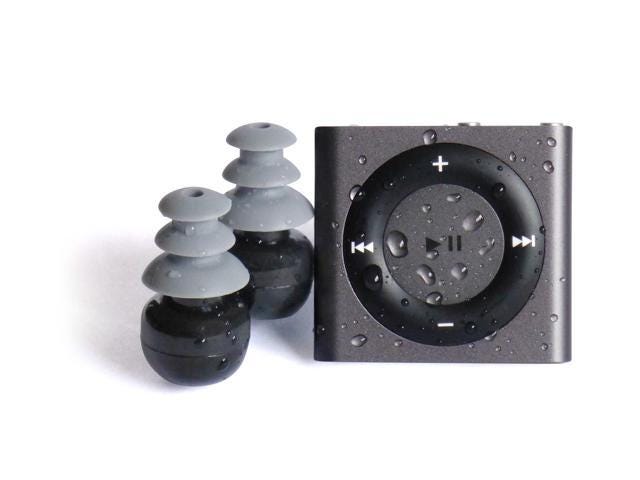
“I would say the product that has changed my life the most is Apple’s new
waterproof iPod shuffle. I had tried waterproof mp3 players in the past but
either the audio was really bad or they would only function a few meters
underwater. So I wrote off the idea of having music in the background while
diving a long time ago.
However, this tiny light-weight iPod shuffle was life-changing since it
allows me to listen to music up to 200 ft underwater. The device uses
earbuds to deliver crystal clear sound, including good bass, which was
lacking on other underwater mp3 players that I tried.
I didn’t replace any product that I had previously owned since I’m pretty
much used to diving in complete silence for many years now, which is a
privilege in itself. I was gifted this iPod shuffle by a family member and
instantly fell in love with it. Especially when I’m diving in shallow
waters under 200ft, classical music in the background makes the experience
even more epic when scuba diving.”
Torben Lonne, Diver, Co-Founder & Chief Editor at DIVEIN.com
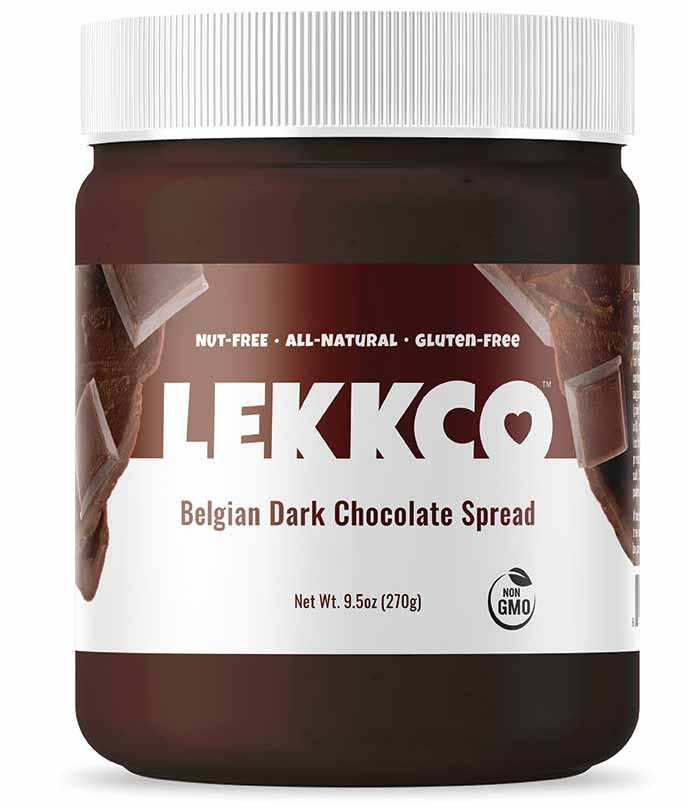
“My mother is diabetic and this is something she can enjoy without throwing her sugars off. For me, since diabetes is hereditary, it’s a guilt-free treat with a glass of milk in the evening for my chocolate craving and I don’t need to worry about having too much sugar.
For my mother, it replaced products made with artificial sugars or real sugar desserts/ treats that impact her blood tests. For me, I don’t need power to stop from eating any chocolate candy, but I can still indulge.”
“The invention that change my life in 2019 is Gravity, a therapeutic
weighted blanket. Before I laid my hands on this product, I used to suffer
a lot from anxiety-induced insomnia. A friend introduced me to Gravity and it looked quite ordinary at first. However, from the very first day that I used this product up until today, I’ve not had any issue of insomnia at all! Gravity indeed transformed my life.”
Disney+ for saving time and money while giving access to the box office’s biggest hits
“Even though it was released, Disney+ has completely changed our buying habits forever. My family is pretty Disney obsessed, and we spend quite a bit of money renting and buying Disney TV shows from Amazon.
My kids want the ability to stream every single Star Wars, Pixar, Disneys, or Marvel movie that comes now. Now the entire Disney catalog is available on Disney+ for only $6.99 a month. Not to mention, every film released in the future will be streaming exclusively on the service after its theatrical release. This service is saving us tons of time and money searching for these shows and movies on various streaming services. Furthermore, 40% of this year’s box returns were produced by Disney. Disney+ is essentially a subscription to the box office’s biggest movies.”
“A great product that came onto the market in 2019 was Google’s Pixel 3a phone. The reason why it was so life-changing is that I rarely upgrade my phone. When I was forced to do so this year, it happened to be Google’s first budget phone with one of the best camera’s on the market.
I’m one of those guys who would rather invest my hard-earned money than to buy the next new toy, but this phone upgrade will provide me with long-term
value which is hard to pass up. As a hobbyist photographer, it allowed me to capture beautiful images without a bulky camera.”
What are the innovations that created value for you in 2019?
What do you hope to see come to the market in 2020?
Let me know in the comments!
*Quick note: this article is not an endorsement of these products, as I’ve never used them, and the links are NOT affiliate links, they’re just there to give you quick access to more info if you want.