
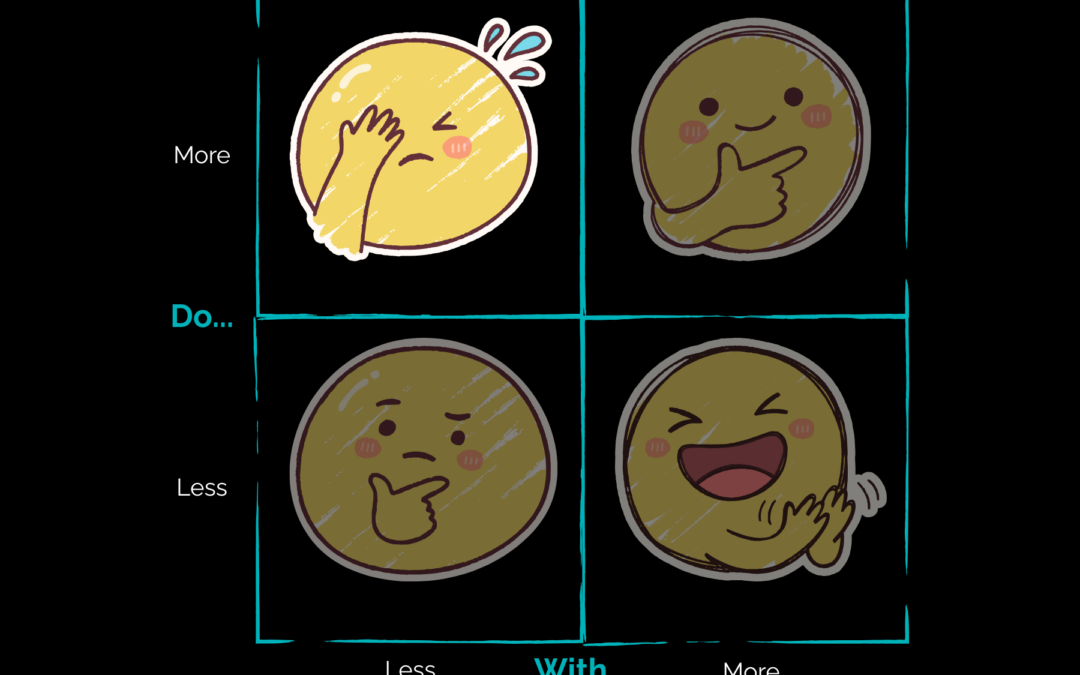
We have entered the “do more with less” era of management edicts.
And, just like the eras of “fail fast,” “synergy,” and “we’re a family,” the phrase is met with eye rolls, silent groans, and a deepening certainty that management is completely out of touch with the reality on the ground.
But what if doing more with less is possible without the extra hours and stress that lead to burnout?
(Re)Define “more.”
When we hear “more,” we naturally think of work. More meetings. More emails. More Slacks, texts, Zooms. For most of my career, I believed the more emails I received, meetings I attended, and documents I wrote, the more valuable I was.
Volume does not equal value.
“More” can’t (and shouldn’t) mean more work. It must mean something else.
More value creation. Less box checking.
More progress. Less process.
More meaningful work. Less meaningless activity.
What is the “more” you want from your team? Define it or you’ll get more emails, meetings, and documents. Name it (value, efficiency, progress), and your team will figure out how to do it.
Experiment with “less.”
A client’s team stopped sending meeting summaries. They didn’t send shorter ones, change the distribution list, or even share the link to the AI note-taker. They just stopped.
No one noticed.
Six months later, a new team member asked if they would send a meeting summary. The team leader said no but offered to recap next steps before everyone left the room. No one argued. Everyone left the meeting with clarity on what they needed to do next.
Activity does not equal achievement.
Our days are filled with BS work, tasks that we do because we’ve always done them, because they feel important, and because we worry what happens if we stop.
Documents don’t ensure that people are informed, aligned, or are ready to act.
Meetings don’t guarantee that everyone has thoughtfully considered and agreed on a decision.
Meeting summaries don’t make people complete their next steps.
It doesn’t mean we don’t need documents, meetings, or meeting summaries. But “less” is possible.
Ask your team what you can do less of. Stop doing things and see if people notice. If you can’t stop something completely, ask what less of it looks like. Instead of a meeting summary, send next steps. Instead of a presentation, write a one-page summary. Instead of a spreadsheet build a visual dashboard.
Rethink “indispensable.”
The managers in my client’s training program were in roles that everyone called the most pivotal in the company. They didn’t feel pivotal. They felt reactive and overwhelmed, with no control over their own calendars.
The COO’s fix was simple. Just stop attending.
It surprised him that they wouldn’t. They couldn’t. The fear of missing something kept them in every room, including the ones that ran fine without them.
You’re in every meeting because you’re good at your job. Being good got you invited into every decision, and somewhere along the way no one uninvited you. Now you stay out of habit, not need. The permission to step back is usually there. You just haven’t tested it long enough to know what happens.
Presence does not equal performance.
Look at your calendar for the meetings you sit in out of habit. Pick one this week to not attend. Resist the urge to instructions. Simply tell the team lead you won’t attend and that you trust them to keep things moving.
Your absence isn’t dropping the ball. It’s demonstrating that you trust the team and empowering them to do their jobs. It’s the rare version of less that gives you more time and your team their autonomy.
“Do more with less” isn’t a demand to work harder
The constraint isn’t going anywhere. Volume isn’t value. Activity isn’t achievement. Presence isn’t performance. It’s a reason to finally drop what doesn’t matter.