Picasso and the Redefinition of Leadership in the Age of AI

Picasso and the Redefinition of Leadership in the Age of AI

Spain, 1896

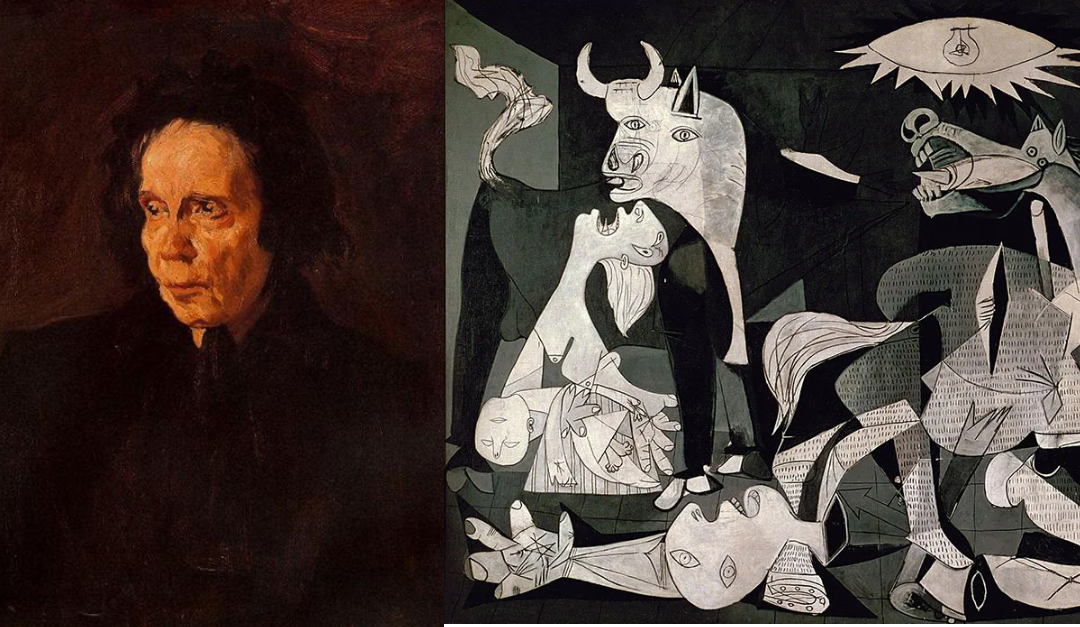
At the tender age of 14, Pablo Ruiz Picasso painted a portrait of his Aunt Pepa a work of brilliant academic realism that would go on to be hailed as “without a doubt one of the greatest in the whole history of Spanish painting.”

In 1901, he abandoned his mastery of realism, painting only in shades blue and blue-green.

There’s debate over why Picasso’s Blue Period began. Some argue that it’s a reflection of the poverty and desperation he experienced as a starving artist in Paris. Others claim it was a response to the suicide of his friend, Carles Casagemas. But Bill Gurley, a longtime venture capitalist, has a different theory.

Picasso abandoned realism because of the Kodak Brownie.

Introduced on February 1, 1900, the Kodak Brownie made photography widely available, fulfilling George Eastman’s promise that “you press the button, we do the rest.”

An ocean away, Gurley argues, Picasso’s “move toward abstraction wasn’t a rejection of skill; it was a recognition that realism had stopped being the frontier….So Picasso moved on, not because realism was wrong, but because it was finished.”


Washington DC, 2004

Three years before Drive took the world by storm, Daniel Pink published his third book, A Whole New Mind: Why Right-Brainers Will Rule the Future.

In it, he argues that a combination of technological advancements, higher standards of living, and access to cheaper labor are pushing us from a world that values left brain skills like linear thought, analysis, and optimization towards one that requires right brain skills like artistry, empathy, and big picture thinking.

As a result, those who succeed in the future will be able to think like designers, tell stories with context and emotional impact, and combine disparate pieces into a whole greater than the sum of its parts. Leaders will need to be empathetic, able to create “a pathway to more intense creativity and inspiration,” and guide others in the pursuit of meaning and significance.


California, 2026

Barry O’Reilly, author of Unlearn, published his monthly blog post, “Six Counterintuitive Trends to Think about for 2026,” in which he outlines what he believes will be the human reactions to a world in which AI is everywhere.

Leadership, he asserts, will cease to be measured by the resources we control (and how well we control them to extract maximum value) but by judgment. Specifically, a leader’s ability to:

  • Ask better questions
  • Frame decisions clearly
  • Hold ambiguity without freezing
  • Know when not to use AI


The Price of Safety vs the Promise of Greatness

 Picasso walked away from a thriving and lucrative market where he was an emerging star to suffer the poverty, uncertainty, and desperation of finding what was next. It would take more than a decade for him to find international acclaim. He would spend the rest of his life as the most famous and financially successful artist in the world.

Are you willing to take that same risk?

You can cling to the safety of what you know, the markets, industries, business models, structures, incentives that have always worked. You can continue to demand immediate efficiency, obedience, and profit while experimenting with new tech and playing with creative ideas.

Or you can start to build what’s next. You don’t have to abandon what works, just as Picasso didn’t abandon paint. But you do have to start using your resources in new ways. You must build the characteristics and capabilities that Daniel Pink outlines.  You must become the “counterintuitive” leader that embraces ambiguity, role models critical thinking, and rewards creativity and risk-taking.

Do you have the courage to be counterintuitive?

Are you willing to embrace your inner Picasso?
10 Moments of Innovation Zen: Military

10 Moments of Innovation Zen: Military

Innovation is something different that creates value. Sometimes it’s big, new to the world, world-changing things. Sometimes it’s a slight tweak to make things easier, faster, cheaper or better.

Sometimes, it’s both.

It’s no secret that the military and NASA are birthplaces of incredible inventions (something new) and innovations (something different that creates value). Most people know that Velcro, nylon, and powdered drinks (Tang!) originated at Nasa, and that Jeep, GPS, and the internet come to us from the military.

But did you know that these 10 everyday innovations have their origin in the military?

Duct Tape

Invented in 1942 to seal ammo boxes with something that could resist water and dirt while also being fast and easy to remove so soldiers could quickly access ammunition when they needed it. Originally, it was made by applying a rubber-based adhesive to duck cloth, a plain and tightly woven cotton fabric, and has evolved over the years to be used for everything from repairing equipment on the moon to purses.

Synthetic Rubber Tires

Speaking of rubber, prior to WWII, most rubber was harvested from trees in South America and shipped to southern Asia where the majority of rubber products were produced. When the Axis powers cut-off access to Asia, the US military turned to Firestone, Goodyear, and Standard Oil to create a replacement substance. The recipe they created is still used today.

Silly Putty

Image Credit: thestrong.org

Like most inventions, there were a lot of failed experiments before the right synthetic rubber recipe was found. Silly Putty is the result of one of those experiments. A scientist at GE developed the strange substance but quickly shelved it after it became clear that it had no useful military application. Years later, GER execs started showing off the novelty item at cocktail parties, an advertising exec in attendance saw its commercial potential and bought the manufacturing rights, packaged it into eggs and sold it as a toy. 350 million eggs later, we’re still playing with it.

Superglue

The result of another failed experiment, Superglue came onto the market in 1958 and has stuck around ever since (sorry, that pun was intended). Military scientists were testing materials to use as clear plastic rifle sights and created an incredibly durable but impossibly sticky substance called cyanoacrylate. Nine years later it was being sold commercially as Superglue and eventually did make its way into military use during the Vietnam War as a way to immediately stop bleeding from wounds.

Feminine Hygiene pads

Image Credit: Museum of American History

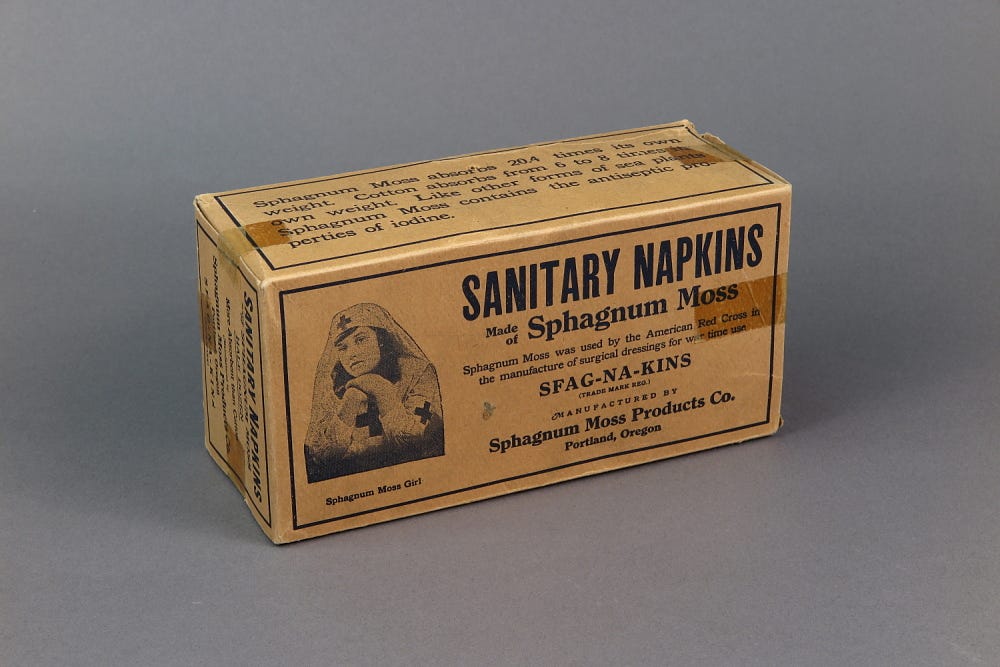
Before Superglue was used to stop bleeding, bandages woven with cellulose were used on the battlefields and hospitals. Seeing how effective the bandages were at holding blood and the convenience of having so many on hand, US and British WW1 nurses began using them as sanitary napkins and bandage makers adapted and expanded their post-War product lines to accommodate.

Undershirts

Image Credit: Foto-ianniello/Getty Images

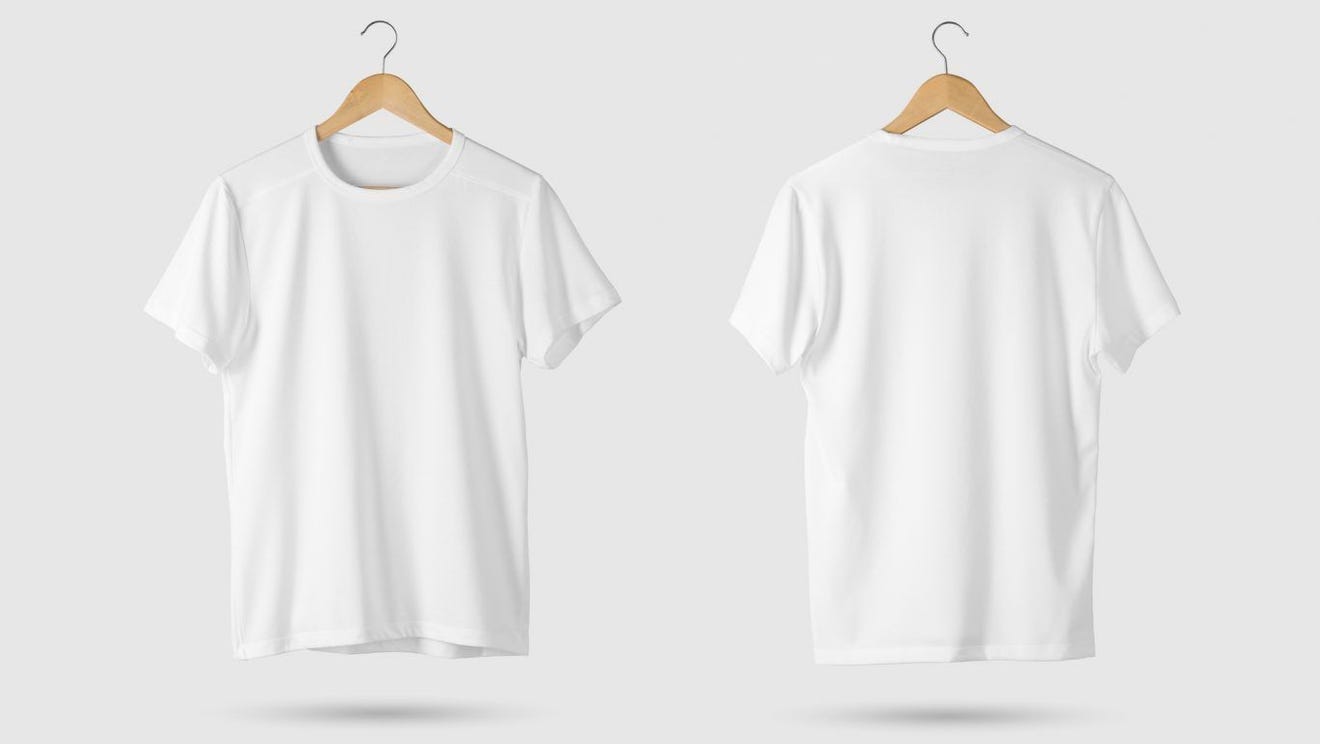
While people have been wearing undergarments for centuries, the undershirt as we know it — a t-shaped, cotton, crewneck — didn’t come into being until the early twentieth century. Manufactured and sold by the Cooper Underwear Co., it caught the Navy’s eye as a more convenient and practical option than the current button-up shirts. In 1905, it became part of the official Navy uniform and the origin of the term “crewneck.”

Aerosol Big Spray

Image Credit: National WWII Museum

Soldiers fighting in the Pacific theater of WWII had a lot to worry about, so they were eager to cross mosquitos and malaria off that list. In response, the Department of Defense teamed up with the Department of Agriculture to find a way to deliver insecticide as a fine mist. The first aerosol “bug bomb” was patented in 1941 and, thanks to the development of a cheaper plastic aerosol valve, became commercially available to civilians in 1949.

Canned Food

Image Credit: Pacific Paratrooper — WordPress.com

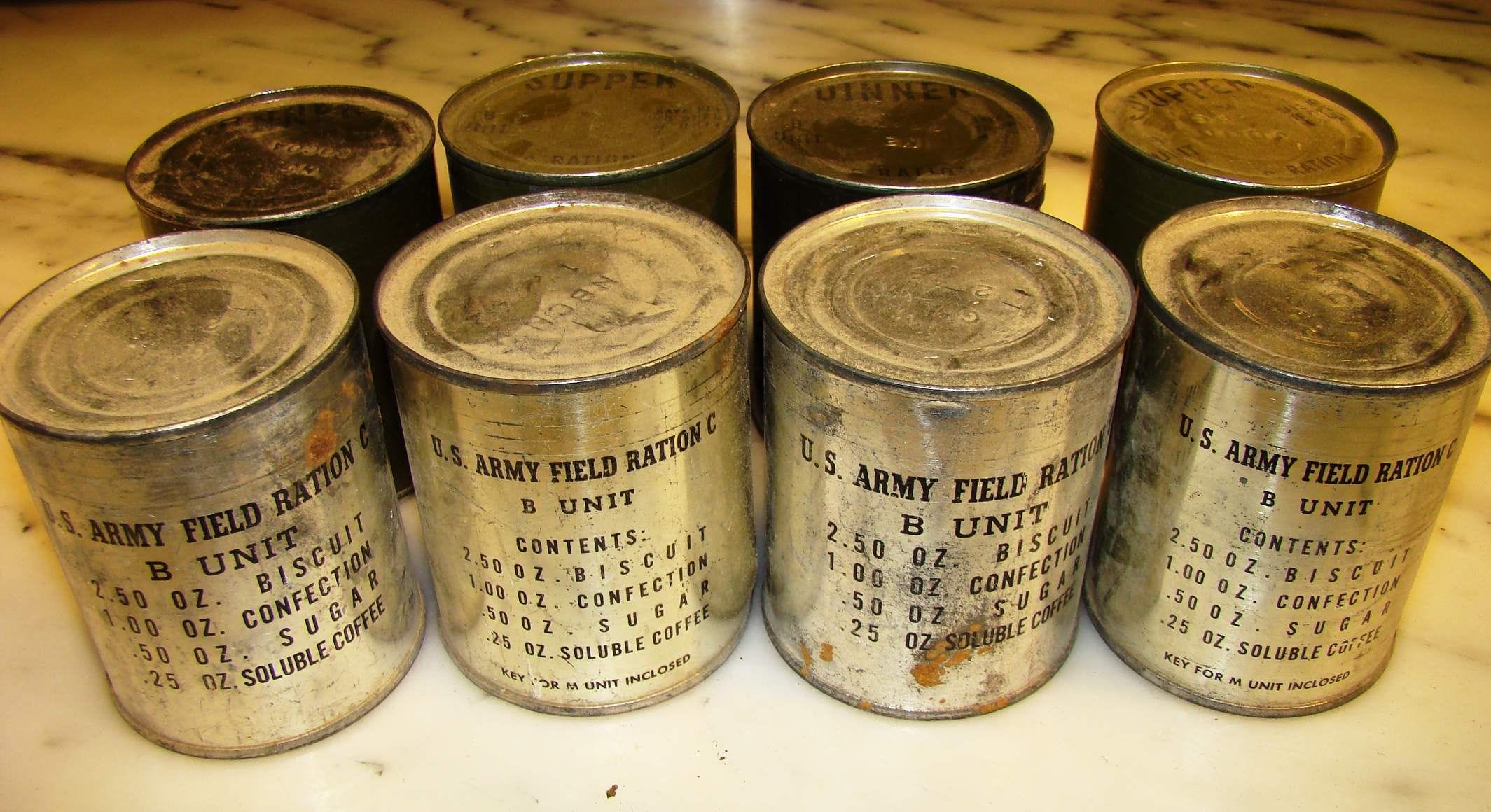
While it’s not surprising that canned foods were originally created for the military, it may surprise you to learn that it was Napoleon’s armies that first used the concept. In response to the French Government’s offer of a large cash reward for anyone who could find a way to preserve large quantities of food, an inventor discovered that food cooked inside a jar wouldn’t spoil unless the seal leaked, or the container was broken. But glass jars are heavy and fragile, so innovation continued until WW1 when metal cans replaced the glass jars.

Microwave

RadaRange on the Nuclear Ship NS Savannah

This is another one that you probably would have guessed has its origins in the military but may be surprised by its actual origin story. The term “microwave” refers to an adaptation of radar technology that creates electromagnetic waves on a tiny scale and passes those micro-waves through food, vibrating it, and heating it quickly. The original microwaves made their debut in 1946 on ships but it took another 20 years to get the small and affordable enough to be commercially viable.

Wristwatches

Image Credit: Hodinkee

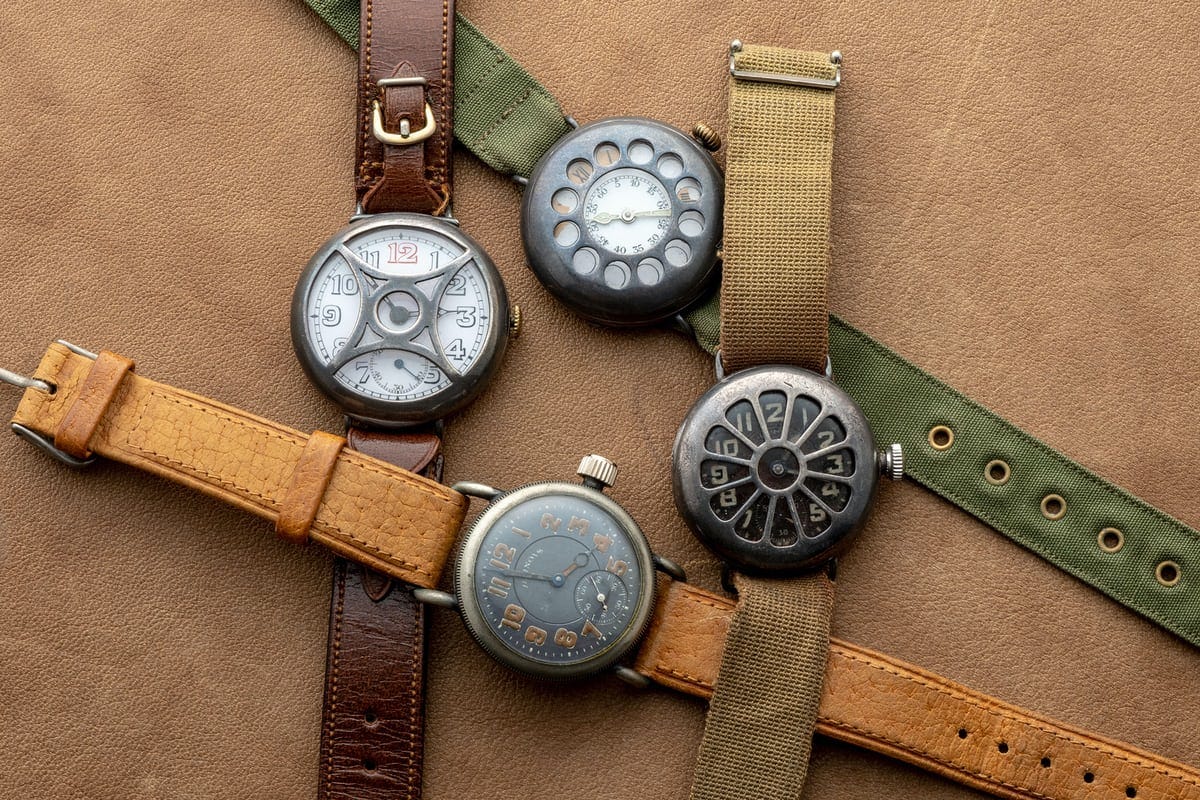
Watches first appeared on the scene in the 15th century but they didn’t become reliable or accurate until the late 1700s. However, up until the early 20th century, wristwatches were primarily worn as jewelry by women and men used pocket watches. During its military campaigns in the late 1880s, the British Army began using wristwatches as a way to synchronize maneuvers without alerting the enemy to their plans. And the rest, as they say, is history.


So, there you have it. 10 everyday innovations brought to us civilians by the military. Some, like synthetic rubber, started as intentional inventions (something new) and quickly became innovations (something new that creates value). Some, like superglue and silly putty, are “failed” experiments that became innovations. And some, like undershorts and feminine products, are pure innovations (value-creating adaptations of pre-existing products to serve different users and users).

Sources: USA TodayPocket-lint.com, and Mic.com